AI Marketing Videos: Where They Work (and Where They Don't) Across Your Funnel
AI marketing videos excel at some funnel stages and fall short at others. Discover which use cases deliver results and how to build your video strategy without the hype.
Everyone is talking about AI marketing videos. But where do they actually work for your marketing?
The hype is loud. The reality is more specific.
AI video works great in some parts of your funnel. It falls short in others. Knowing the difference saves you time and money.
This guide maps AI marketing videos to each stage of your funnel. You will see where AI video beats traditional production. You will also see where it does not belong. This is not a tool comparison. This is not a how-to tutorial.
This is about strategic fit. You will learn which funnel stages get the best results, when traditional video still makes sense, and how to use both approaches together.
Key Takeaways
High-Volume Content: AI marketing videos work best for social media ads, personalized videos, and product demos where you need to create multiple videos quickly and test different versions.
Best ROI Stage: You get the strongest returns in the middle and bottom of your funnel. This is where personalization and rapid iteration drive conversions.
Brand Awareness Limit: Top-of-funnel brand storytelling still favors traditional production when premium quality signals your positioning.
Strategy Matters Most: AI avatars and video creation tools amplify your creative strategy. They do not replace it.
Testing Over Betting: Cost efficiency comes from testing 10 video variations instead of spending everything on one perfect video.
No Universal Answer: The right approach depends on your funnel stage, what your audience expects, and how much video content you need to produce.
What Makes AI Video Different from Traditional Video Production
Traditional video production takes weeks. You book a studio. You hire a crew. You schedule talent. You wait for edits. One video can cost thousands of dollars.
AI video flips this model. You can create videos in hours or days instead of weeks. The cost drops significantly. You can produce multiple videos for what one traditional shoot costs.
But AI video is not magic. The quality range varies:
Where AI video works well:
Product demos that need frequent updates
Social media ads where you test different messaging
Explainer videos with consistent branding elements
You can create personalized videos for different audience segments. You can run A/B tests with actual video content instead of guessing what works.
This does not replace creative strategy. You still need to know your target audience. You still need strong messaging. AI just removes the production barrier that stopped you from testing your ideas.
Where AI Marketing Videos Actually Deliver Results
AI marketing videos work differently at each stage of your funnel. The key is matching the right video type to what your audience needs at that moment.
Let's map this out.
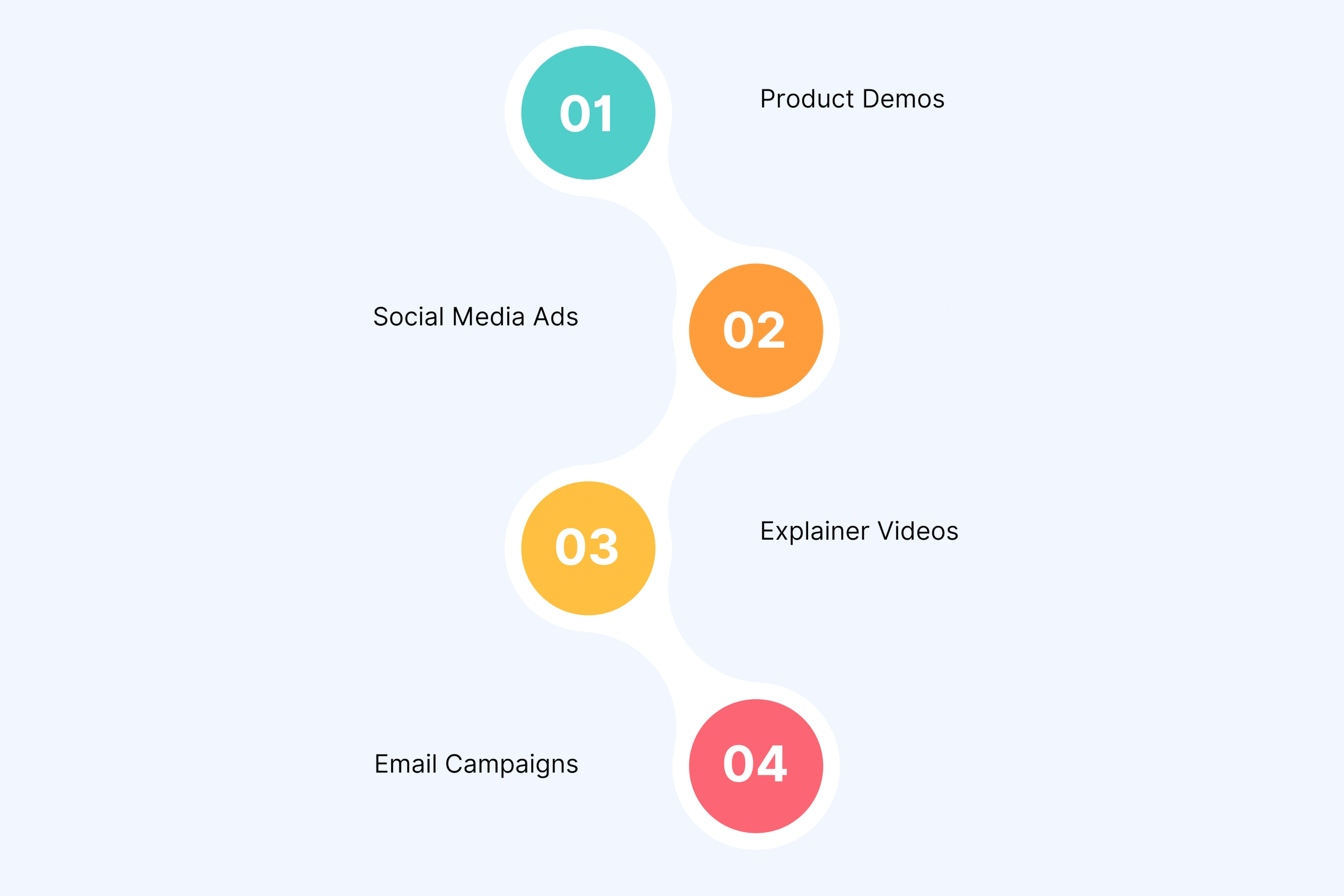
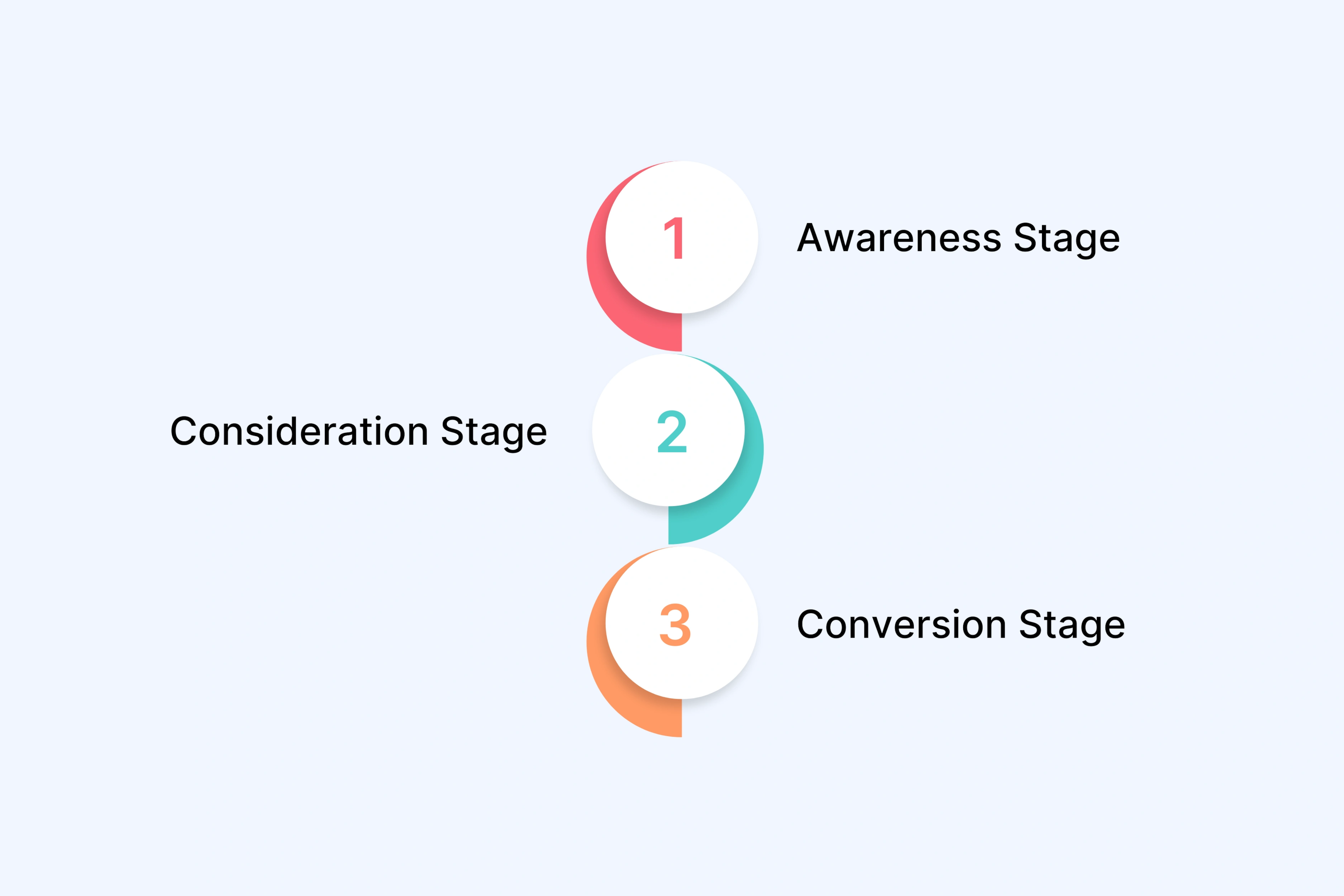
Quick Reference: AI Video Use Cases by Funnel Stage
Top-of-Funnel Awareness: Social Media Ads and Scroll-Stopping Content
This is where AI video generators shine. You need volume. You need speed. You need to test what works.
Social media platforms reward frequent testing. One video ad rarely wins across different platforms. What works on Instagram might flop on LinkedIn. AI lets you create videos for each platform without blowing your budget.
Why AI works here:
You can test 10 video ads in the time traditional production takes for one
Realistic avatars work well for product demos and testimonials
Ad creation happens in hours or days, not weeks
You reach a global audience by creating videos in multiple languages
Budget efficiency lets you test messaging before committing to expensive production
The video length matters less than the message. Short-form content performs well when you nail the hook in the first three seconds.
Middle-of-Funnel Consideration: Explainer Videos and Educational Content
Your audience is researching. They want to understand how your product works. They are comparing options. This is where high quality marketing videos build trust.
AI excels at creating consistent educational content. Your branding elements stay the same. Your messaging stays on point. You can update product walkthroughs when features change without reshooting everything.
Why AI works here:
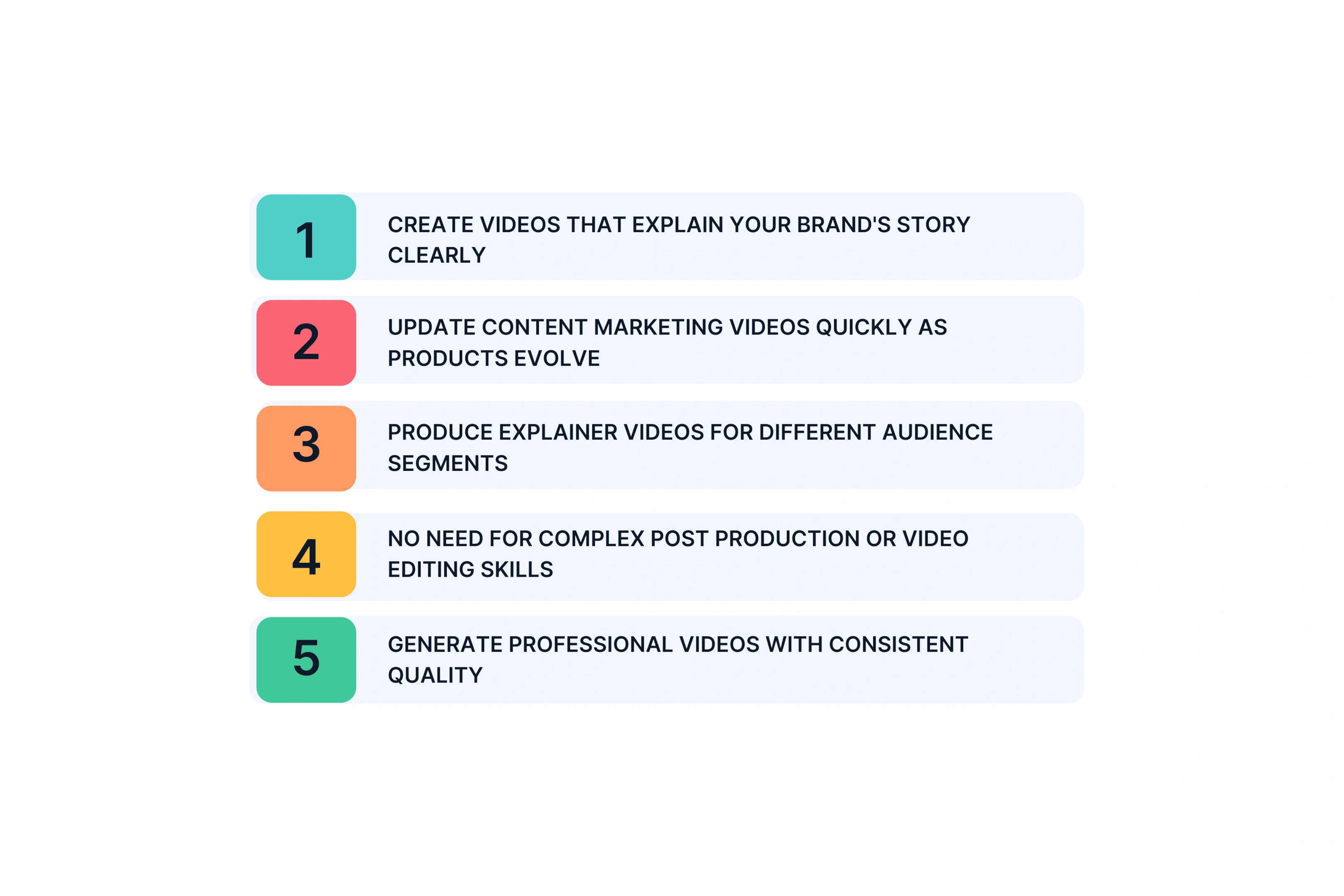
Create videos that explain your brand's story clearly
Update content marketing videos quickly as products evolve
Produce explainer videos for different audience segments
No need for complex post production or video editing skills
Generate professional videos with consistent quality
This stage is about building brand awareness and trust. You need professional marketing videos that educate without selling too hard.
Bottom-of-Funnel Conversion: Personalized Videos at Scale
This is where AI generated marketing videos drive sales. You combine video content's engagement power with personalization.
AI marketing videos work best for direct response. Video ads that need testing. Product videos that drive clicks. Content where you measure conversions.
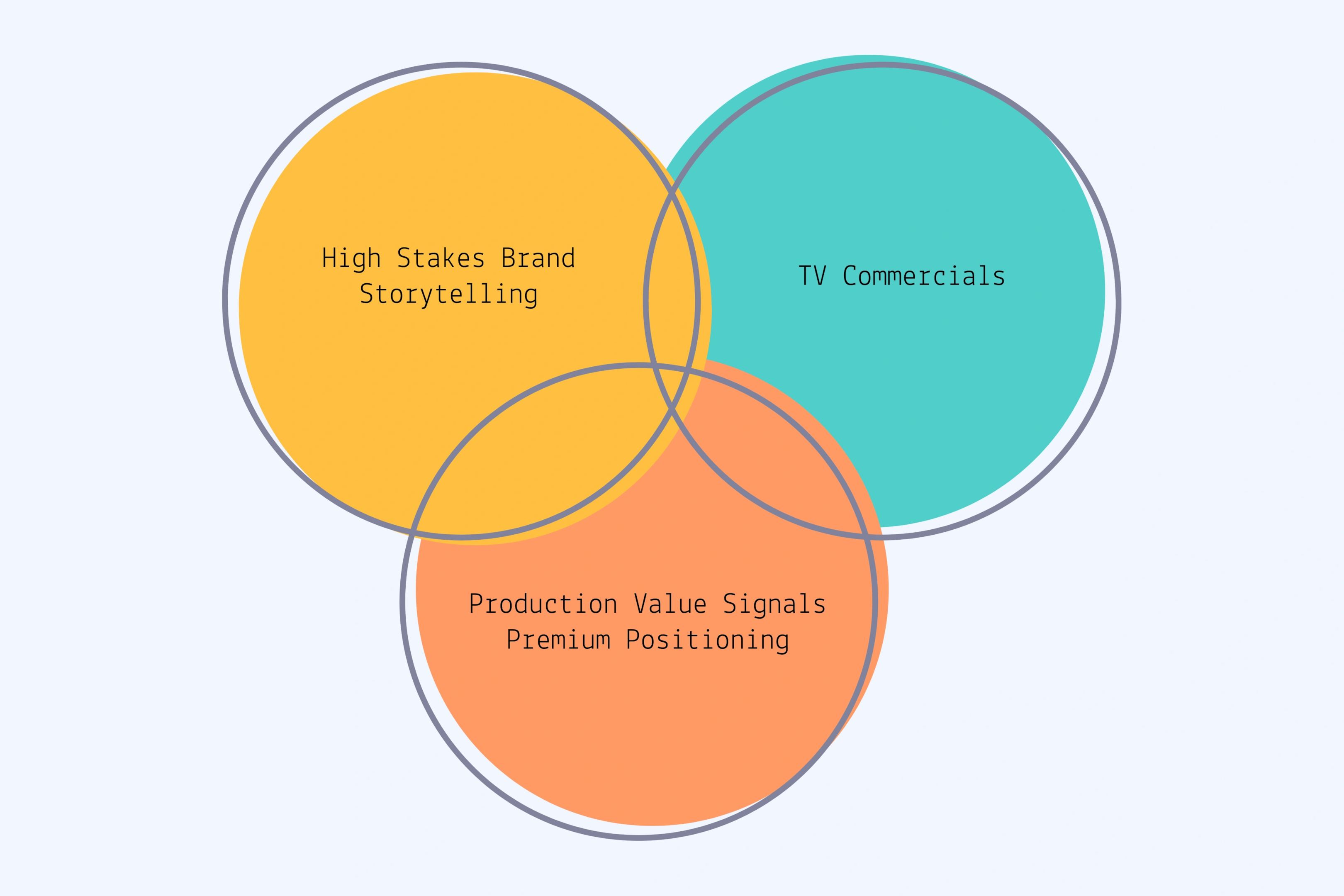
Brand storytelling is different. Your brand manifesto matters. Your premium product launch sets positioning. These moments need production value that signals who you are.
The question is not AI or traditional. The question is when to use each.
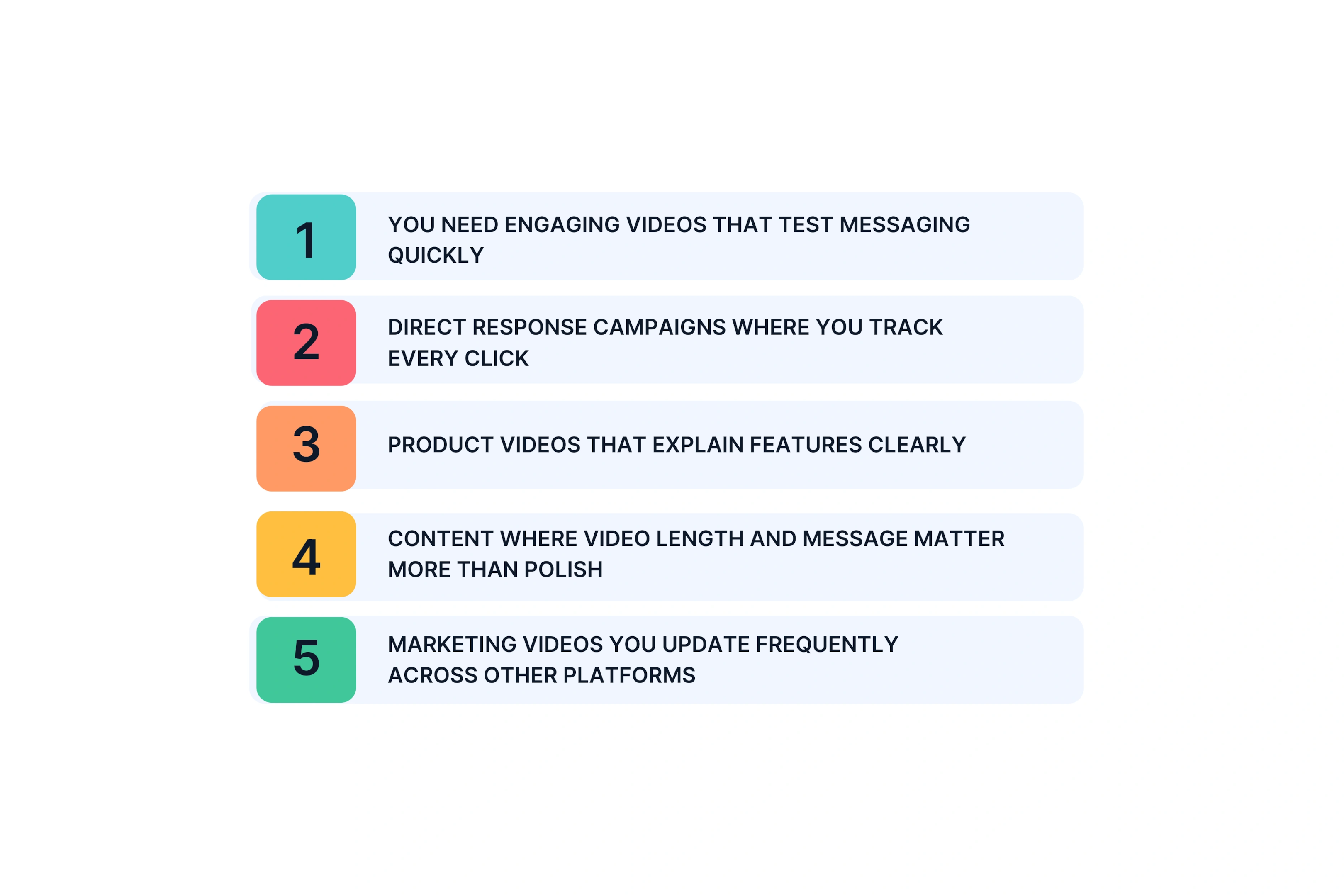
AI generated marketing videos shine when:
You need engaging videos that test messaging quickly
Direct response campaigns where you track every click
Product videos that explain features clearly
Content where video length and message matter more than polish
Marketing videos you update frequently across other platforms
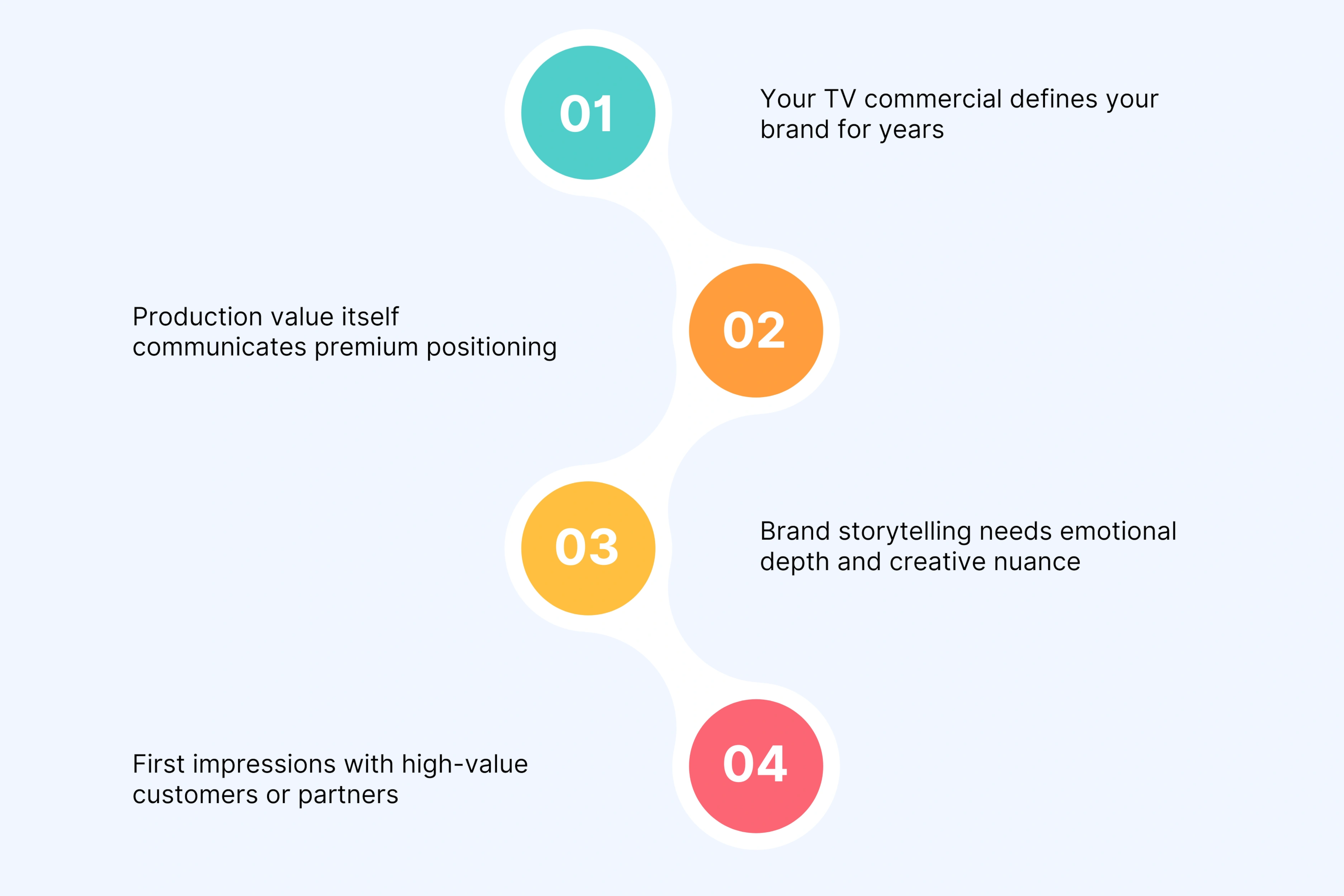
Traditional production wins when:
Your TV commercial defines your brand for years
Production value itself communicates premium positioning
Some moments define your brand. A product launch. A rebrand. A major campaign. These are not times to use a marketing video maker with video templates.
But here is the strategic part. You can use both.
Use traditional production for your hero brand video. Use an AI marketing video generator for the 50 variations you test in paid social. Create your main product video with b roll and full production. Use generative AI to create localized versions for different markets.
AI tools give you volume. Traditional gives you signature moments. Smart brands use video creation that matches the stakes.
What AI Video Tools Actually Do (Without the Marketing Speak)
AI video tools are not magic boxes. They are systems trained on millions of videos. Understanding what they actually do helps you use them better.
Let's break down what happens when you create videos with AI.
Understanding AI Avatars: From Uncanny Valley to Practical Use
AI avatars are digital people created by generative AI. They speak your script. They move naturally. They look real enough for marketing videos.
Modern AI marketing video generator tools train on real human movements. The avatars sync lips to your audio. They blink. They gesture. The quality improved dramatically in the past two years.
What makes AI avatars work now:
Lip-sync accuracy matches your voiceover timing
Natural movement avoids the robotic look of early versions
Custom avatar options let you match your target audience
Video creation happens fast once you write the script
Where limitations still exist:
Complex emotions are harder to convey than simple expressions
Some audiences still prefer real people for testimonials
Brand trust matters when choosing between AI and human talent
The practical use is simple. AI avatars work well for explainer content, product demos, and educational marketing videos. They struggle with content that needs deep emotional connection.
Managing expectations matters. Tell your audience what they are watching if authenticity is part of your brand promise.
The Video Editing Skills Gap: What AI Handles vs. What Still Requires Creative Decisions
AI marketing video generators handle technical tasks. They do not handle strategy.
Video templates apply your brand colors and fonts in a few clicks
Format resizing for different platforms happens automatically
Basic cuts and transitions follow template logic
Stock footage libraries give you b roll options
Text overlays and captions generate from your script
What still needs human judgment:
Your core messaging and what problem you solve
Video length based on platform and audience attention
Pacing that matches emotional beats in your story
Audience targeting and which segments see which version
A marketing video maker can build the video. You still decide what it says and who sees it. AI studios provide the production capability. You provide the creative direction.
The gap is real. Video creation becomes easier. Video strategy does not.
Building Your AI Video Strategy: A Framework for Marketing Teams
You do not need to replace your entire video creation process. Start small. Test where AI fits. Scale what works.
Here is how to build your strategy without breaking what already works.
Start with High-Volume, Lower-Stakes Content
Begin with content where speed beats perfection. Social media testing. Ad variations. Segment-specific videos.
Best starting points:
Test 5 video ad versions instead of betting on one
Create product videos for different customer segments
Build explainer content for FAQ topics
Produce social media content on a weekly schedule
This builds confidence. You learn what realistic avatars work for your audience. You see which video templates match your brand. You gather real data before expanding.
Fast iteration matters more than perfect execution at this stage. An AI marketing video generator lets you test ideas that would sit in your backlog for months.
Map Your Video Needs Across the Funnel
Different funnel stages need different video approaches. Map this out before you commit to any marketing video maker.
Awareness stage needs:
Volume for testing across platforms
Multiple videos to find what resonates
Budget efficiency to reach more people
Consideration stage needs:
Consistent quality for brand trust
Updated content as products evolve
Educational marketing videos that explain value
Conversion stage needs:
Personalized videos with customer data
Tailored messaging for different segments
Clear CTAs matched to buyer intent
Brand building needs:
Premium production value
Emotional storytelling depth
Signature content that defines positioning
Allocate AI video creation for volume and personalization stages. Keep traditional production for signature brand moments.
Measuring What Actually Matters: Key Metrics Beyond Production Speed
Production speed is nice. Revenue growth matters more.
Track these metrics:
Engagement rates on AI videos vs. traditional content
Conversion lift from personalized videos
Cost per acquisition across video types
Revenue attributed to video campaigns
Message testing insights from variations
Compare these against your marketing goals. Production time savings only matter if performance stays strong or improves.
Real-World Example: How Brands Use AI Video Across Multiple Channels
A D2C skincare brand needed 50+ product videos. Email campaigns. Social media platforms. Paid ads. All needed different messaging.
Traditional video production quote: 8 weeks timeline, $30,000+ budget.
The AI approach: Working with a creative partner, they created multiple videos with personalized variables. Different product combinations. Different spokesperson styles. Different CTAs for each platform.
Timeline: 2 weeks from brief to final videos.
Results: Personalized videos got 3x higher engagement than generic content. A/B testing revealed which product combinations drove purchases. The winning message informed their entire Q4 campaign.
Key insight: Speed enabled learning. They tested 10 approaches in the time traditional production takes for one. The data shaped strategy, not just content volume.
Common Pitfalls When Teams First Adopt AI Video
Teams jump into AI video creation with high hopes. Then they hit predictable problems that slow results.
Here are the mistakes to avoid.
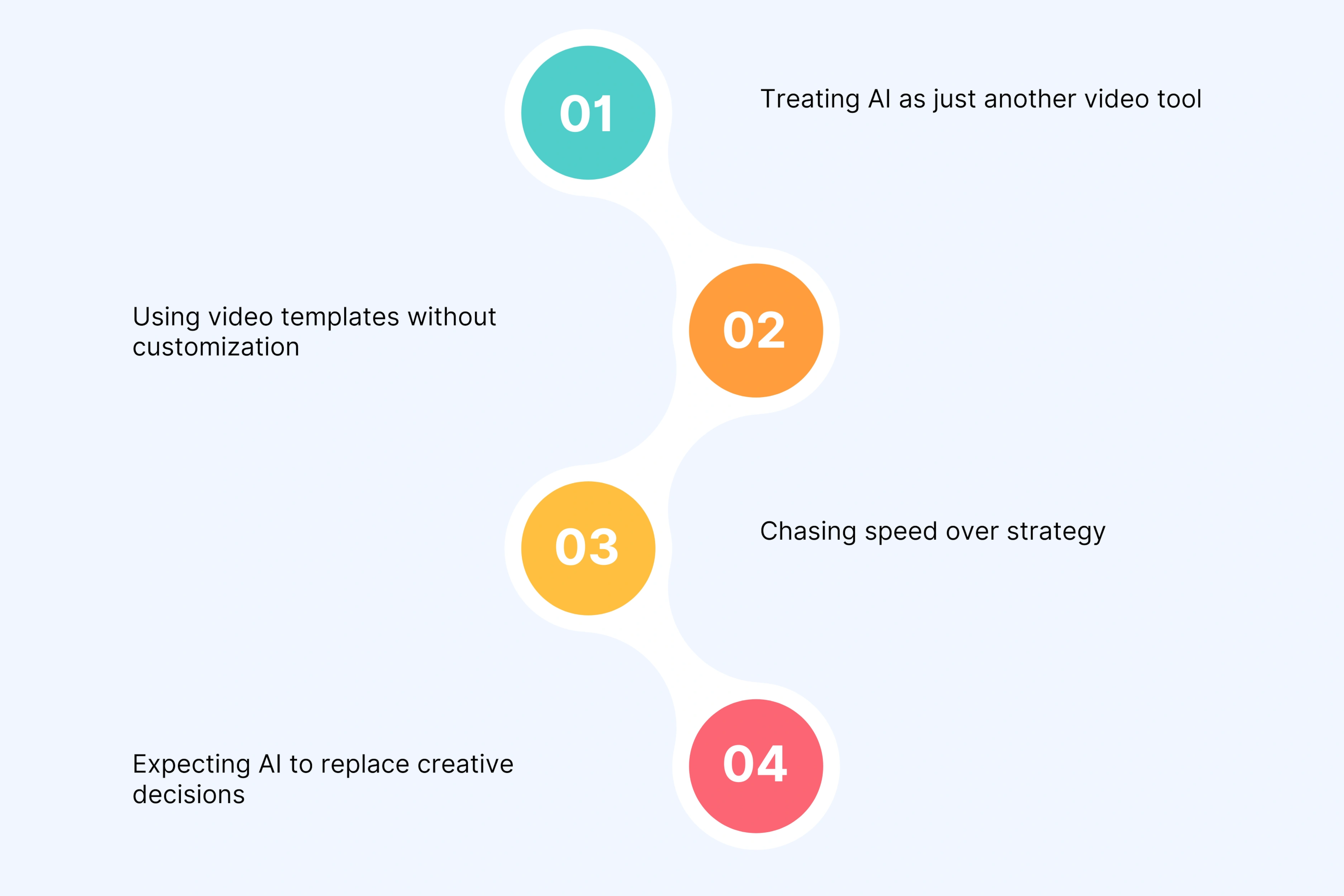
Mistake 1: Treating AI as just another video tool. AI changes your content creation system. It is not a faster version of your old process. You need new workflows for testing, approval, and distribution.
Mistake 2: Using video templates without customization. Default templates from any AI marketing video generator look generic. Your competitors use the same ones. Customize colors, fonts, and layouts to match your brand.
Mistake 3: Chasing speed over strategy. An AI video editor makes production fast. But fast videos with weak messaging still fail. Strategy comes first. Production speed comes second.
Mistake 4: Expecting AI to replace creative decisions. Video generators build the video. You still choose the message, the audience, and the goal.
The "Generic" Problem: When Every Video Looks the Same
Stock footage looks like stock footage. Default templates look like templates. When every marketing video maker offers the same assets, your videos blend in.
The fix is customization:
How to maintain brand identity:
Use consistent branding elements across all AI videos
Create custom avatar options that match your target audience
Adapt video style to your brand guidelines, not AI studios defaults
Add your own footage alongside stock assets
Write scripts in your brand voice, not template language
Generic marketing videos get scrolled past. Branded AI videos stop the scroll.
How a Creative Partner Approach Helps Teams Scale Video Content
Most teams face a choice. Build video skills in-house or hire an expensive agency. Both paths take time and money you might not have.
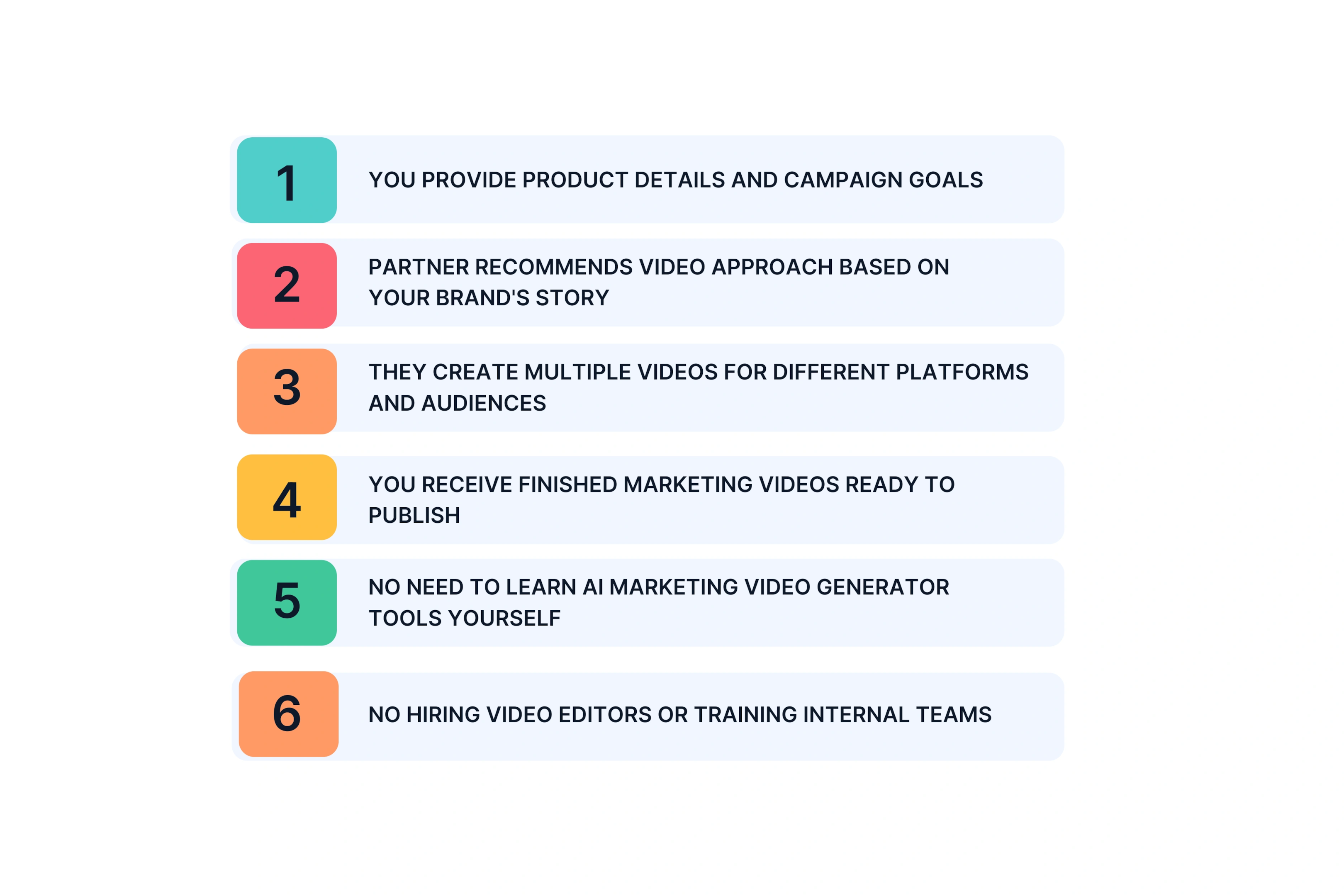
Partner recommends video approach based on your brand's story
They create multiple videos for different platforms and audiences
You receive finished marketing videos ready to publish
No need to learn AI marketing video generator tools yourself
No hiring video editors or training internal teams
This works across all video types. Social media ads. Email campaigns. Promotional videos. Landing pages. Product demos.
The key difference from a marketing video maker or self-service tool: You get strategic recommendations, not just access to video templates and AI models.
The Strategic Value: Testing and Iteration Without Production Overhead
The real value is not speed. It is learning.
When production constraints disappear, you test more. Different video length options. Multiple messaging angles. Various AI generated video variations for each segment.
What testing without overhead enables:
Try 10 video concepts in one campaign cycle
Test which product stories resonate with different audiences
Identify winning messages before scaling ad spend
Learn what drives conversions through real data, not guesses
Traditional video production makes you bet big on one approach. Self-service video generators require internal expertise you might not have. A creative partner removes both constraints.
You get professional videos at scale. Your team focuses on strategy and results, not production logistics.
Frequently Asked Questions
Can AI-generated videos match the quality of professional marketing videos?
AI excels at functional content like product demos, video ads, and explainer videos. Premium brand storytelling still benefits from traditional production. It's not about matching quality. It's about fit-for-purpose quality for your specific use case.
Do you need video editing skills to create AI marketing videos?
Basic AI video generators work with minimal effort. You pick video templates and create videos in a few clicks. But strategic results still need marketing judgment. A creative partner removes the technical barrier entirely while handling strategy and production.
How long does it take to create marketing videos with AI?
Simple videos take hours. Custom content with a creative partner takes 24 to 48 hours. Complex campaigns need planning time. Speed is about iteration, not just first-draft delivery.
What's the difference between AI video generators and working with a creative partner?
Self-service AI tools require internal expertise and time to learn. Creative partners deliver finished professional marketing videos with strategy included. You provide the brief. They handle production and quality control.
Where do AI avatars work best in marketing videos?
AI avatars work well for social media ads, product videos, testimonials, and explainer content. They're less suitable for executive messaging, high-stakes brand campaigns, or content where authenticity perception matters most.
Can AI create personalized videos at scale for email campaigns?
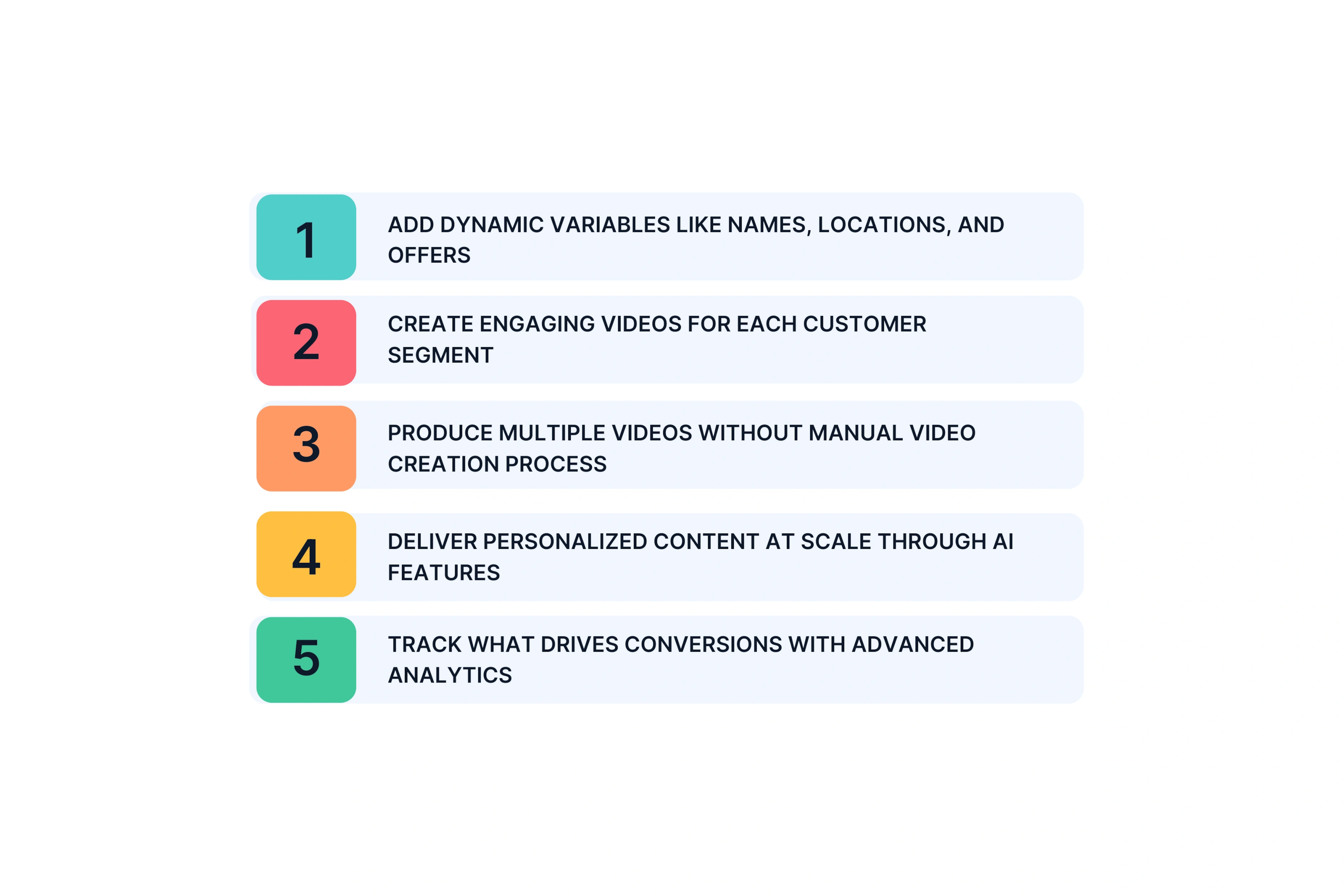
Yes. AI adds dynamic variables like names, locations, and offers. This works well for account-based marketing, customer onboarding, and sales follow-ups. Personalized videos combine engagement with automation.
What video formats can AI tools create?
AI marketing video generators create video ads, explainer videos, product demos, social media content, promotional videos, UGC-style testimonials, and landing page videos. Focus on your marketing goals, not just technical formats.
How much do AI marketing videos cost compared to traditional production?
Traditional single video costs $3,000 to $15,000 plus weeks of time. AI self-service marketing video maker tools cost $20 to $200 monthly but need internal time. Creative partners offer lower cost per video with strategy included. Real savings come from volume and iteration, empowering users to test more without production constraints.
What This Means for Teams Trying to Scale Video Content
AI marketing video generators remove production constraints. You can test more. Personalize more. Reach different platforms without traditional timeline and budget bottlenecks.
The question is not whether AI tools fit your goals. The question is which video content needs you are not addressing today because of time, budget, or complexity.
If you are producing fewer videos than your strategy demands, or spending weeks on content that needs to ship in days, explore how a creative partner removes production overhead while maintaining strategic control.
Let's Turn Your Scripts into Stunning Videos. Sign Up Now.
Stop struggling with video creation. Our AI simplifies the process, letting you create professional-looking videos from text in record time. Try it for free today!
AI Marketing Videos: Where They Work (and Where They Don't) Across Your Funnel
AI marketing videos excel at some funnel stages and fall short at others. Discover which use cases deliver results and how to build your video strategy without the hype.
Everyone is talking about AI marketing videos. But where do they actually work for your marketing?
The hype is loud. The reality is more specific.
AI video works great in some parts of your funnel. It falls short in others. Knowing the difference saves you time and money.
This guide maps AI marketing videos to each stage of your funnel. You will see where AI video beats traditional production. You will also see where it does not belong. This is not a tool comparison. This is not a how-to tutorial.
This is about strategic fit. You will learn which funnel stages get the best results, when traditional video still makes sense, and how to use both approaches together.
Key Takeaways
High-Volume Content: AI marketing videos work best for social media ads, personalized videos, and product demos where you need to create multiple videos quickly and test different versions.
Best ROI Stage: You get the strongest returns in the middle and bottom of your funnel. This is where personalization and rapid iteration drive conversions.
Brand Awareness Limit: Top-of-funnel brand storytelling still favors traditional production when premium quality signals your positioning.
Strategy Matters Most: AI avatars and video creation tools amplify your creative strategy. They do not replace it.
Testing Over Betting: Cost efficiency comes from testing 10 video variations instead of spending everything on one perfect video.
No Universal Answer: The right approach depends on your funnel stage, what your audience expects, and how much video content you need to produce.
What Makes AI Video Different from Traditional Video Production
Traditional video production takes weeks. You book a studio. You hire a crew. You schedule talent. You wait for edits. One video can cost thousands of dollars.
AI video flips this model. You can create videos in hours or days instead of weeks. The cost drops significantly. You can produce multiple videos for what one traditional shoot costs.
But AI video is not magic. The quality range varies:
Where AI video works well:
Product demos that need frequent updates
Social media ads where you test different messaging
Explainer videos with consistent branding elements
You can create personalized videos for different audience segments. You can run A/B tests with actual video content instead of guessing what works.
This does not replace creative strategy. You still need to know your target audience. You still need strong messaging. AI just removes the production barrier that stopped you from testing your ideas.
Where AI Marketing Videos Actually Deliver Results
AI marketing videos work differently at each stage of your funnel. The key is matching the right video type to what your audience needs at that moment.
Let's map this out.
Quick Reference: AI Video Use Cases by Funnel Stage
Top-of-Funnel Awareness: Social Media Ads and Scroll-Stopping Content
This is where AI video generators shine. You need volume. You need speed. You need to test what works.
Social media platforms reward frequent testing. One video ad rarely wins across different platforms. What works on Instagram might flop on LinkedIn. AI lets you create videos for each platform without blowing your budget.
Why AI works here:
You can test 10 video ads in the time traditional production takes for one
Realistic avatars work well for product demos and testimonials
Ad creation happens in hours or days, not weeks
You reach a global audience by creating videos in multiple languages
Budget efficiency lets you test messaging before committing to expensive production
The video length matters less than the message. Short-form content performs well when you nail the hook in the first three seconds.
Middle-of-Funnel Consideration: Explainer Videos and Educational Content
Your audience is researching. They want to understand how your product works. They are comparing options. This is where high quality marketing videos build trust.
AI excels at creating consistent educational content. Your branding elements stay the same. Your messaging stays on point. You can update product walkthroughs when features change without reshooting everything.
Why AI works here:
Create videos that explain your brand's story clearly
Update content marketing videos quickly as products evolve
Produce explainer videos for different audience segments
No need for complex post production or video editing skills
Generate professional videos with consistent quality
This stage is about building brand awareness and trust. You need professional marketing videos that educate without selling too hard.
Bottom-of-Funnel Conversion: Personalized Videos at Scale
This is where AI generated marketing videos drive sales. You combine video content's engagement power with personalization.
AI marketing videos work best for direct response. Video ads that need testing. Product videos that drive clicks. Content where you measure conversions.
Brand storytelling is different. Your brand manifesto matters. Your premium product launch sets positioning. These moments need production value that signals who you are.
The question is not AI or traditional. The question is when to use each.
AI generated marketing videos shine when:
You need engaging videos that test messaging quickly
Direct response campaigns where you track every click
Product videos that explain features clearly
Content where video length and message matter more than polish
Marketing videos you update frequently across other platforms
Traditional production wins when:
Your TV commercial defines your brand for years
Production value itself communicates premium positioning
Some moments define your brand. A product launch. A rebrand. A major campaign. These are not times to use a marketing video maker with video templates.
But here is the strategic part. You can use both.
Use traditional production for your hero brand video. Use an AI marketing video generator for the 50 variations you test in paid social. Create your main product video with b roll and full production. Use generative AI to create localized versions for different markets.
AI tools give you volume. Traditional gives you signature moments. Smart brands use video creation that matches the stakes.
What AI Video Tools Actually Do (Without the Marketing Speak)
AI video tools are not magic boxes. They are systems trained on millions of videos. Understanding what they actually do helps you use them better.
Let's break down what happens when you create videos with AI.
Understanding AI Avatars: From Uncanny Valley to Practical Use
AI avatars are digital people created by generative AI. They speak your script. They move naturally. They look real enough for marketing videos.
Modern AI marketing video generator tools train on real human movements. The avatars sync lips to your audio. They blink. They gesture. The quality improved dramatically in the past two years.
What makes AI avatars work now:
Lip-sync accuracy matches your voiceover timing
Natural movement avoids the robotic look of early versions
Custom avatar options let you match your target audience
Video creation happens fast once you write the script
Where limitations still exist:
Complex emotions are harder to convey than simple expressions
Some audiences still prefer real people for testimonials
Brand trust matters when choosing between AI and human talent
The practical use is simple. AI avatars work well for explainer content, product demos, and educational marketing videos. They struggle with content that needs deep emotional connection.
Managing expectations matters. Tell your audience what they are watching if authenticity is part of your brand promise.
The Video Editing Skills Gap: What AI Handles vs. What Still Requires Creative Decisions
AI marketing video generators handle technical tasks. They do not handle strategy.
Video templates apply your brand colors and fonts in a few clicks
Format resizing for different platforms happens automatically
Basic cuts and transitions follow template logic
Stock footage libraries give you b roll options
Text overlays and captions generate from your script
What still needs human judgment:
Your core messaging and what problem you solve
Video length based on platform and audience attention
Pacing that matches emotional beats in your story
Audience targeting and which segments see which version
A marketing video maker can build the video. You still decide what it says and who sees it. AI studios provide the production capability. You provide the creative direction.
The gap is real. Video creation becomes easier. Video strategy does not.
Building Your AI Video Strategy: A Framework for Marketing Teams
You do not need to replace your entire video creation process. Start small. Test where AI fits. Scale what works.
Here is how to build your strategy without breaking what already works.
Start with High-Volume, Lower-Stakes Content
Begin with content where speed beats perfection. Social media testing. Ad variations. Segment-specific videos.
Best starting points:
Test 5 video ad versions instead of betting on one
Create product videos for different customer segments
Build explainer content for FAQ topics
Produce social media content on a weekly schedule
This builds confidence. You learn what realistic avatars work for your audience. You see which video templates match your brand. You gather real data before expanding.
Fast iteration matters more than perfect execution at this stage. An AI marketing video generator lets you test ideas that would sit in your backlog for months.
Map Your Video Needs Across the Funnel
Different funnel stages need different video approaches. Map this out before you commit to any marketing video maker.
Awareness stage needs:
Volume for testing across platforms
Multiple videos to find what resonates
Budget efficiency to reach more people
Consideration stage needs:
Consistent quality for brand trust
Updated content as products evolve
Educational marketing videos that explain value
Conversion stage needs:
Personalized videos with customer data
Tailored messaging for different segments
Clear CTAs matched to buyer intent
Brand building needs:
Premium production value
Emotional storytelling depth
Signature content that defines positioning
Allocate AI video creation for volume and personalization stages. Keep traditional production for signature brand moments.
Measuring What Actually Matters: Key Metrics Beyond Production Speed
Production speed is nice. Revenue growth matters more.
Track these metrics:
Engagement rates on AI videos vs. traditional content
Conversion lift from personalized videos
Cost per acquisition across video types
Revenue attributed to video campaigns
Message testing insights from variations
Compare these against your marketing goals. Production time savings only matter if performance stays strong or improves.
Real-World Example: How Brands Use AI Video Across Multiple Channels
A D2C skincare brand needed 50+ product videos. Email campaigns. Social media platforms. Paid ads. All needed different messaging.
Traditional video production quote: 8 weeks timeline, $30,000+ budget.
The AI approach: Working with a creative partner, they created multiple videos with personalized variables. Different product combinations. Different spokesperson styles. Different CTAs for each platform.
Timeline: 2 weeks from brief to final videos.
Results: Personalized videos got 3x higher engagement than generic content. A/B testing revealed which product combinations drove purchases. The winning message informed their entire Q4 campaign.
Key insight: Speed enabled learning. They tested 10 approaches in the time traditional production takes for one. The data shaped strategy, not just content volume.
Common Pitfalls When Teams First Adopt AI Video
Teams jump into AI video creation with high hopes. Then they hit predictable problems that slow results.
Here are the mistakes to avoid.
Mistake 1: Treating AI as just another video tool. AI changes your content creation system. It is not a faster version of your old process. You need new workflows for testing, approval, and distribution.
Mistake 2: Using video templates without customization. Default templates from any AI marketing video generator look generic. Your competitors use the same ones. Customize colors, fonts, and layouts to match your brand.
Mistake 3: Chasing speed over strategy. An AI video editor makes production fast. But fast videos with weak messaging still fail. Strategy comes first. Production speed comes second.
Mistake 4: Expecting AI to replace creative decisions. Video generators build the video. You still choose the message, the audience, and the goal.
The "Generic" Problem: When Every Video Looks the Same
Stock footage looks like stock footage. Default templates look like templates. When every marketing video maker offers the same assets, your videos blend in.
The fix is customization:
How to maintain brand identity:
Use consistent branding elements across all AI videos
Create custom avatar options that match your target audience
Adapt video style to your brand guidelines, not AI studios defaults
Add your own footage alongside stock assets
Write scripts in your brand voice, not template language
Generic marketing videos get scrolled past. Branded AI videos stop the scroll.
How a Creative Partner Approach Helps Teams Scale Video Content
Most teams face a choice. Build video skills in-house or hire an expensive agency. Both paths take time and money you might not have.
Partner recommends video approach based on your brand's story
They create multiple videos for different platforms and audiences
You receive finished marketing videos ready to publish
No need to learn AI marketing video generator tools yourself
No hiring video editors or training internal teams
This works across all video types. Social media ads. Email campaigns. Promotional videos. Landing pages. Product demos.
The key difference from a marketing video maker or self-service tool: You get strategic recommendations, not just access to video templates and AI models.
The Strategic Value: Testing and Iteration Without Production Overhead
The real value is not speed. It is learning.
When production constraints disappear, you test more. Different video length options. Multiple messaging angles. Various AI generated video variations for each segment.
What testing without overhead enables:
Try 10 video concepts in one campaign cycle
Test which product stories resonate with different audiences
Identify winning messages before scaling ad spend
Learn what drives conversions through real data, not guesses
Traditional video production makes you bet big on one approach. Self-service video generators require internal expertise you might not have. A creative partner removes both constraints.
You get professional videos at scale. Your team focuses on strategy and results, not production logistics.
Frequently Asked Questions
Can AI-generated videos match the quality of professional marketing videos?
AI excels at functional content like product demos, video ads, and explainer videos. Premium brand storytelling still benefits from traditional production. It's not about matching quality. It's about fit-for-purpose quality for your specific use case.
Do you need video editing skills to create AI marketing videos?
Basic AI video generators work with minimal effort. You pick video templates and create videos in a few clicks. But strategic results still need marketing judgment. A creative partner removes the technical barrier entirely while handling strategy and production.
How long does it take to create marketing videos with AI?
Simple videos take hours. Custom content with a creative partner takes 24 to 48 hours. Complex campaigns need planning time. Speed is about iteration, not just first-draft delivery.
What's the difference between AI video generators and working with a creative partner?
Self-service AI tools require internal expertise and time to learn. Creative partners deliver finished professional marketing videos with strategy included. You provide the brief. They handle production and quality control.
Where do AI avatars work best in marketing videos?
AI avatars work well for social media ads, product videos, testimonials, and explainer content. They're less suitable for executive messaging, high-stakes brand campaigns, or content where authenticity perception matters most.
Can AI create personalized videos at scale for email campaigns?
Yes. AI adds dynamic variables like names, locations, and offers. This works well for account-based marketing, customer onboarding, and sales follow-ups. Personalized videos combine engagement with automation.
What video formats can AI tools create?
AI marketing video generators create video ads, explainer videos, product demos, social media content, promotional videos, UGC-style testimonials, and landing page videos. Focus on your marketing goals, not just technical formats.
How much do AI marketing videos cost compared to traditional production?
Traditional single video costs $3,000 to $15,000 plus weeks of time. AI self-service marketing video maker tools cost $20 to $200 monthly but need internal time. Creative partners offer lower cost per video with strategy included. Real savings come from volume and iteration, empowering users to test more without production constraints.
What This Means for Teams Trying to Scale Video Content
AI marketing video generators remove production constraints. You can test more. Personalize more. Reach different platforms without traditional timeline and budget bottlenecks.
The question is not whether AI tools fit your goals. The question is which video content needs you are not addressing today because of time, budget, or complexity.
If you are producing fewer videos than your strategy demands, or spending weeks on content that needs to ship in days, explore how a creative partner removes production overhead while maintaining strategic control.
We are committed to safety, security, and ethical use of our service. Al avatars can only be created and shared with express consent and cannot be used to spread content that's harmful to others.
December 23, 2025
How to Scale Video Ad Production Without the Traditional Bottlenecks
Learn how teams produce 20-30 video ad variations per campaign without massive budgets. Practical strategies for scaling video production that actually work.
Short-Form Video Ads: Why Most Fail in 7 Days (And How to Win)
Most short-form video ads lose 50% performance in 7 days. Learn the attention patterns, variation strategies, and platform tactics that sustain results.
How to Scale UGC Video Ads Without Losing Authenticity (or Your Budget)
UGC video ads drive conversions, but scaling them is expensive and slow. Learn how brands test multiple hooks, maintain authenticity, and reduce ad spend without creator dependency.
Avatar Marketing: Which One Do You Actually Need? (And How to Know)
Avatar marketing can mean digital AI characters OR customer profiling. Learn which one you need, when each works, and how to avoid costly mistakes in your strategy.
We are committed to safety, security, and ethical use of our service. Al avatars can only be created and shared with express consent and cannot be used to spread content that's harmful to others.
Data Encryption
Your data is encrypted both in transit and at rest, ensuring safe and confidential communications at all times.
Privacy Compliance
Our platform adheres to GDPR, CCPA, and SOC 2, safeguarding your data with strict security protocols.
Identity Verification
We use identity checks to ensure only authorized individuals access your account and data.
24/7 Monitoring
Our system continuously monitors for vulnerabilities, keeping your data safe from potential risks.

%20Across%20Your%20Funnel.webp)






.svg)
.svg)
%201.svg)

.webp)
.webp)
.webp)


.svg)
