How to Scale UGC Video Ads Without Losing Authenticity (or Your Budget)
UGC video ads drive conversions, but scaling them is expensive and slow. Learn how brands test multiple hooks, maintain authenticity, and reduce ad spend without creator dependency.
Your UGC ad is working. It is pulling 4x ROAS on Meta. Then week three hits and performance drops by half.
You need fresh hooks. Your creator is booked for two weeks. Finding new vetted creators means starting over and spending another $2,000.
This is the UGC scale problem. The ads work, but traditional production does not keep up with testing needs.
This guide shows you why UGC video ads perform, where creator-dependent production breaks down, and how brands are testing 20 variations without hiring 20 creators or waiting weeks for turnarounds.
Key Takeaways
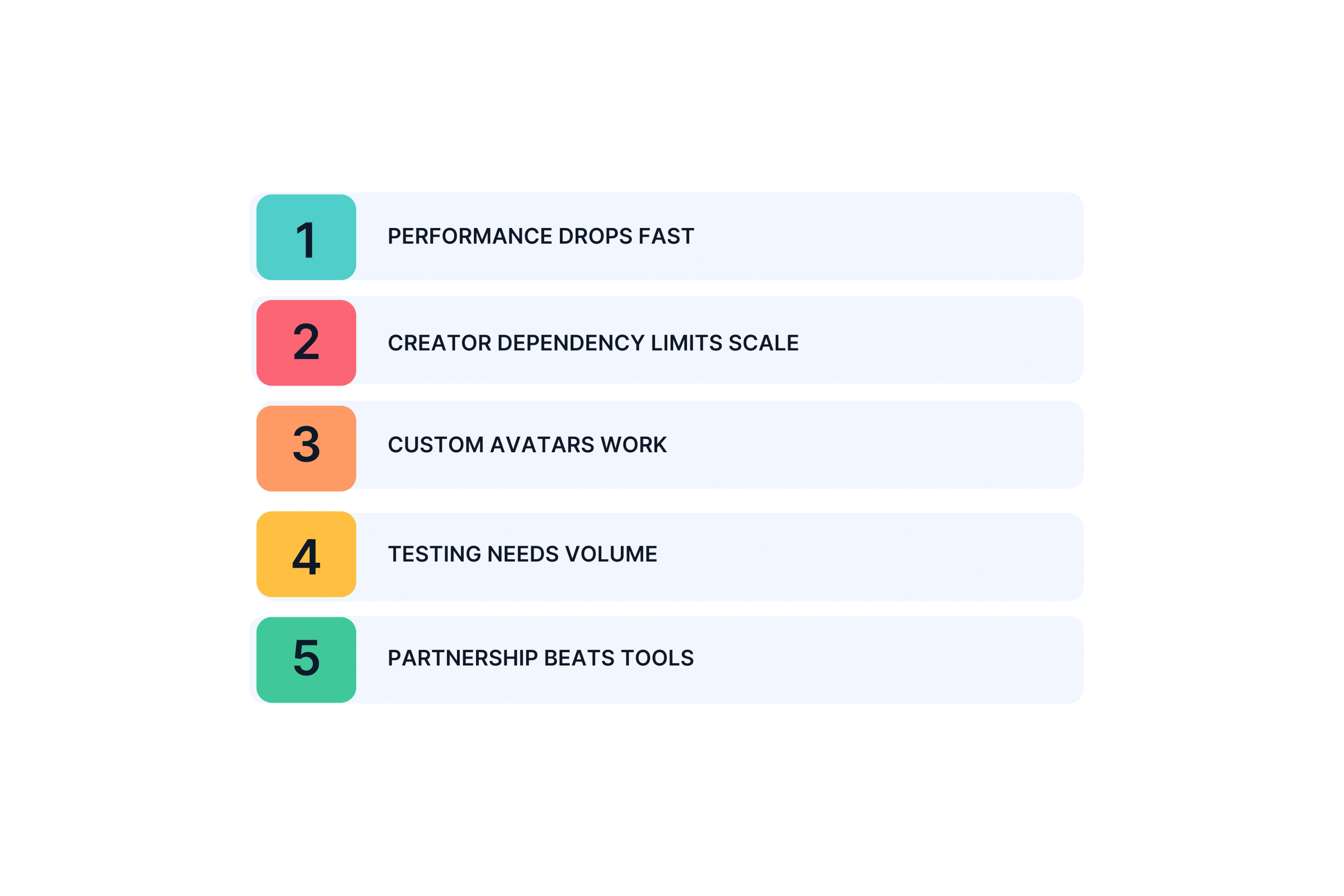
Performance drops fast: UGC video ads convert because they feel real, but creative fatigue kills performance after 2 to 3 weeks. Data shows that UGC ad performance typically drops 30–50% after just 2–3 weeks, which is why high‑performing brands treat UGC as a constantly refreshed testing engine, not a one‑and‑done campaign.
Creator dependency limits scale: Traditional UGC depends on creators, which limits how fast you can test and how much you can produce.
Custom avatars work: Advanced brands use custom virtual influencers designed to match their exact customer profile, not generic AI avatars.
Testing needs volume: Scaling UGC means testing multiple hooks at once, which traditional production cannot support at a reasonable cost.
Partnership beats tools: The future is working with creative partners who provide strategy and finished videos, not self-service tools you operate yourself.
Why UGC Video Ads Work (And Why They Stop Working)
UGC video ads outperform polished brand content. The reason is simple. People trust other people more than they trust brands.
When someone scrolls Instagram or TikTok, they see a mix of posts from friends and ads. UGC ads look like posts from real customers. They do not scream "advertisement." That makes them scroll-stoppers.
The performance numbers tell the story:
Split-screen testimonials on Meta outperform studio demos by over 200%. Meta’s own benchmarks show that UGC‑style ads can achieve up to 3–4× higher ROAS than traditional studio‑produced ads, especially in e‑commerce and D2C verticals.
UGC-style content on TikTok gets 5x higher engagement than polished ads.
Here is the problem. After 2 to 3 weeks, the same hook or creator stops feeling authentic. Your audience has seen it. They scroll past it.
You need fresh content fast. Traditional UGC production cannot deliver that speed. You are stuck waiting on creators and spending hundreds per video. That is where the scale problem starts.
The Creator Dependency Problem (And Why It Kills Scale)
Most brands produce UGC the same way. They find creators, send briefs, wait for videos, give feedback, wait again, and finally get the finished product. This process has real costs that add up fast.
What it actually costs:
Each video costs $200 to $500 per creator.
Testing 20 different hooks means spending $4,000 to $10,000.
Turnaround time is 7 to 14 days from brief to final video.
You need 10 hook variations to find one winner. But most brands cannot afford to produce 10 videos with UGC creators. That is the testing trap.
The Hidden Costs No One Talks About
Finding and vetting creators who match your brand takes time. You need someone who understands your message and represents your audience. That is not easy to find.
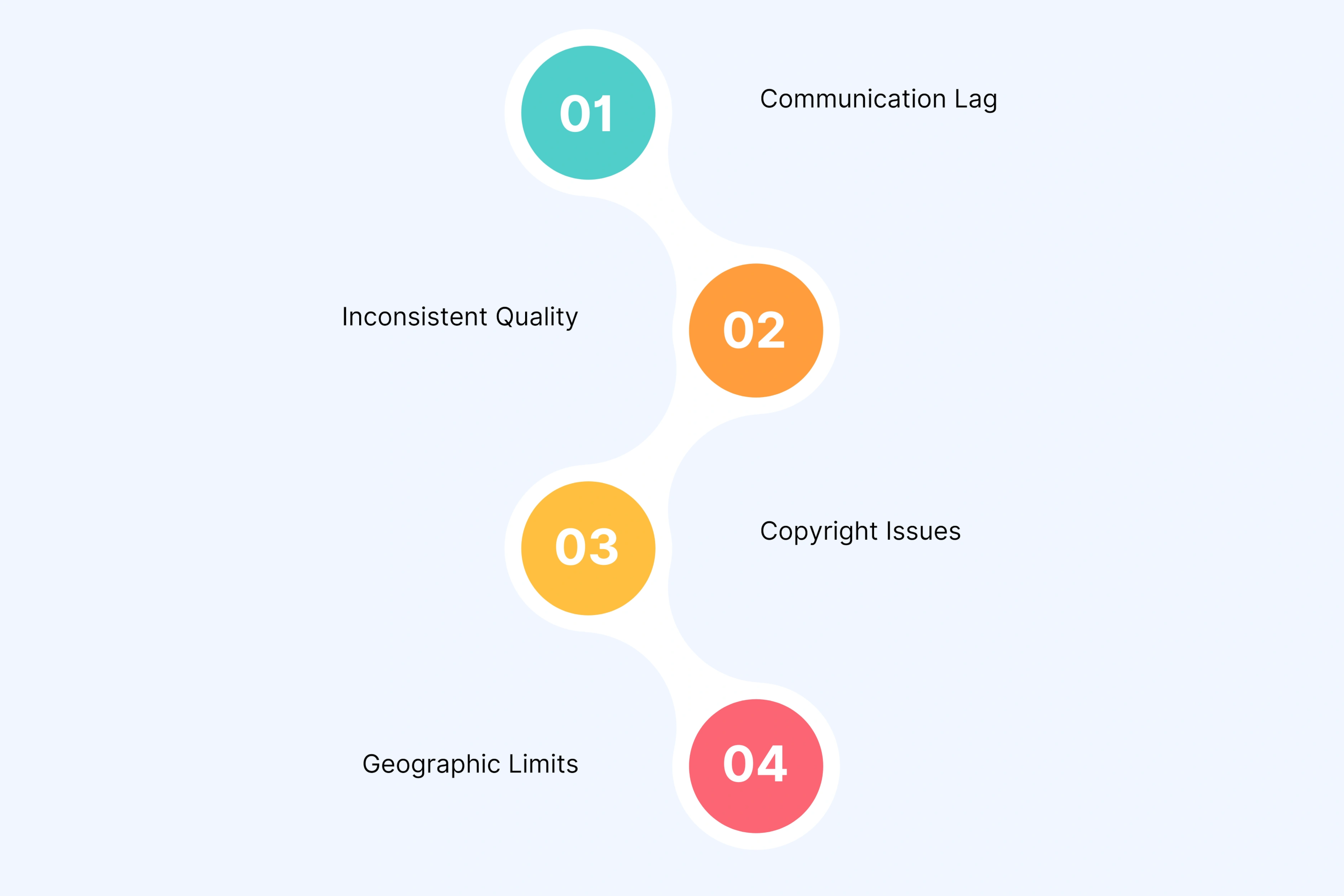
The costs you do not see on the invoice:
Communication lag with back and forth emails, revisions, and approval cycles.
Inconsistent quality where one creator nails it and another misses completely.
Copyright issues and usage rights negotiations for every single video.
Geographic limits when you need someone in a specific niche or demographic.
When Creative Fatigue Sets In
Your audience starts recognizing patterns. Same background. Same energy. Same style. Even if you rotate creators, the format feels repetitive.
The momentum problem:
Your winning ad stops working after 2 to 3 weeks.
You cannot produce replacements fast enough to maintain performance.
High-performing brands test constantly, but traditional UGC production was not built for that pace.
How Custom Virtual Influencers Solve the Scale Problem
Generic AI avatars feel robotic. They do not connect with your audience because they look and sound like software, not people. Custom virtual influencers are different. They are designed around your ideal customer profile.
What makes them different:
Built to match your audience demographics: ethnicity, gender, age, style, and voice.
Designed once and reused across products, campaigns, and platforms indefinitely.
Cost per video drops over time because the same avatar works for hundreds of variations.
Authenticity is not about whether a real human held the camera. It is about relatability and representation. When your avatar matches your target customer, your ads feel real.
What Makes Virtual Influencers Feel Authentic
A custom AI avatar that matches your audience performs better than a generic stock avatar. The key is in the details.
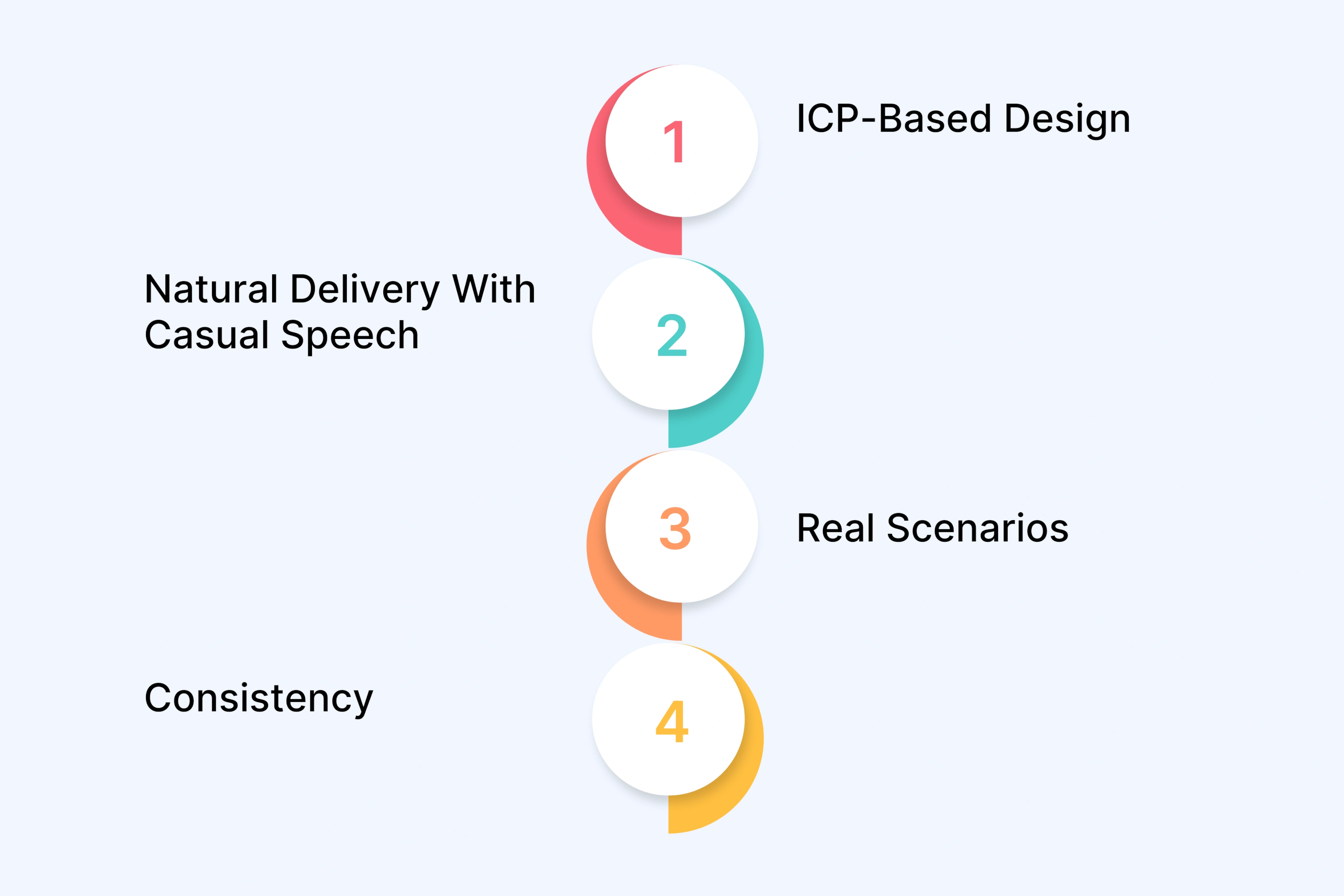
What brands look for:
ICP-based design that reflects your actual customer demographics, not random faces.
Natural delivery with casual speech, pauses, and filler words like "honestly" or "um."
Real scenarios like kitchen counters, car interiors, or bedroom backgrounds instead of studio sets.
Consistency where the same virtual influencer appears across campaigns, unlike rotating through 10 different creators.
This is not about perfection. It is about connection. Your audience wants to see someone who looks and sounds like them.
Custom avatars are only part of the solution. Product training takes it further. This means training AI on your specific products so they appear accurately in every video.
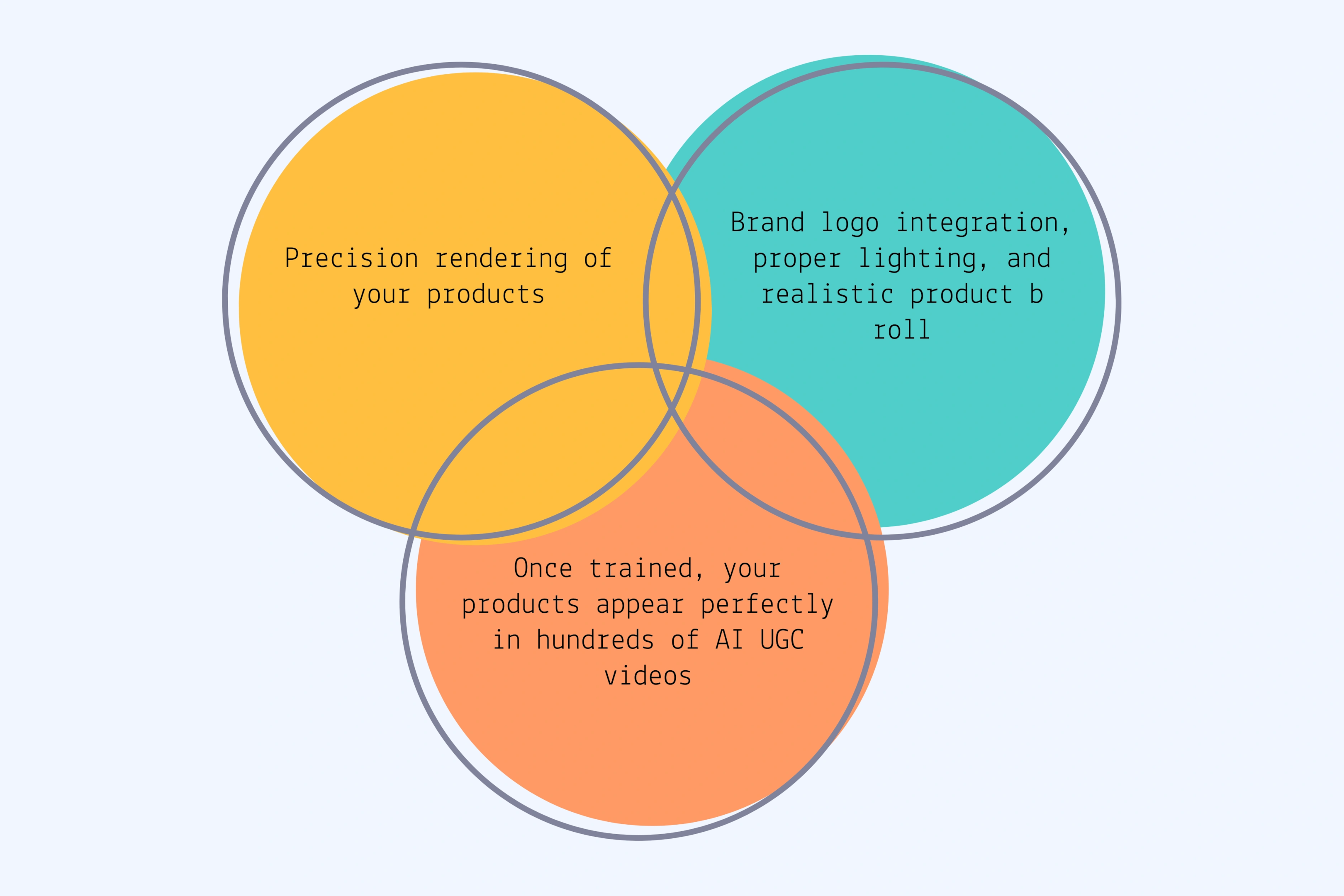
What product training enables:
Precision rendering of your products across different scenarios and angles.
Brand logo integration, proper lighting, and realistic product b roll handled automatically.
Once trained, your products appear perfectly in hundreds of AI UGC videos without reshoots.
A beauty brand needed UGC testimonials for 15 SKUs across 3 audience segments. Traditional approach meant hiring 45+ creators, spending $13,500+, and waiting 4 to 6 weeks.
Unscript designed 3 custom virtual influencers matching each audience segment. The team trained AI on the product catalog and produced 60+ video variations in under 2 weeks. The brand ran aggressive A/B testing without inflating ad spend on creator costs.
What to Test (And Why Most Brands Don't Test Enough)
Creative fatigue is real. Performance drops 30 to 50% after 2 to 3 weeks. Your winning ad stops winning because your audience has seen it too many times.
High-performing brands test 10 to 20 variations at once to find winners fast.
Traditional UGC makes this prohibitively expensive. AI UGC content changes the math.
The economics are simple. You cannot afford to test 20 hooks if each video costs $300 and takes two weeks. Speed matters. Faster testing means faster learning and better ROAS.
The difference is speed and volume. You explore more ideas. You find what works faster. You do not wait on actors or editing cycles. You create, test, and scale.
Why Partnership Beats Self-Service Tools (And What to Look For)
Self-service tools give you software access. You log in, pick an avatar, write a script, and try to create content yourself. The problem is most marketing teams do not have bandwidth to become video producers on top of everything else they manage.
The tool trap:
You get access to software but no strategic guidance on what hooks to test or how to structure scenarios.
Your team becomes the production bottleneck because someone has to write scripts, select avatars, and handle editing.
No one tells you which message works best or how to scale production across campaigns.
A creative partner approach is different. You provide briefs and campaign goals. They deliver strategy and finished videos. Turnaround is 24 to 48 hours for standard UGC and a few days for custom virtual influencer creation.
Self-Service Tools vs Creative Partner
Self-service tools:
You script, select avatars, edit, and iterate yourself.
No strategic input on what your audience responds to or how to test effectively.
Your team spends hours on production instead of strategy and performance.
Creative partner approach:
You provide briefs, product info, campaign goals, and target ICP.
You receive strategic recommendations like avatar selection, hook suggestions, and scenario design, plus complete videos ready to upload.
Iteration cycles are handled end-to-end so you focus on marketing, not production.
When Partnership Makes Sense
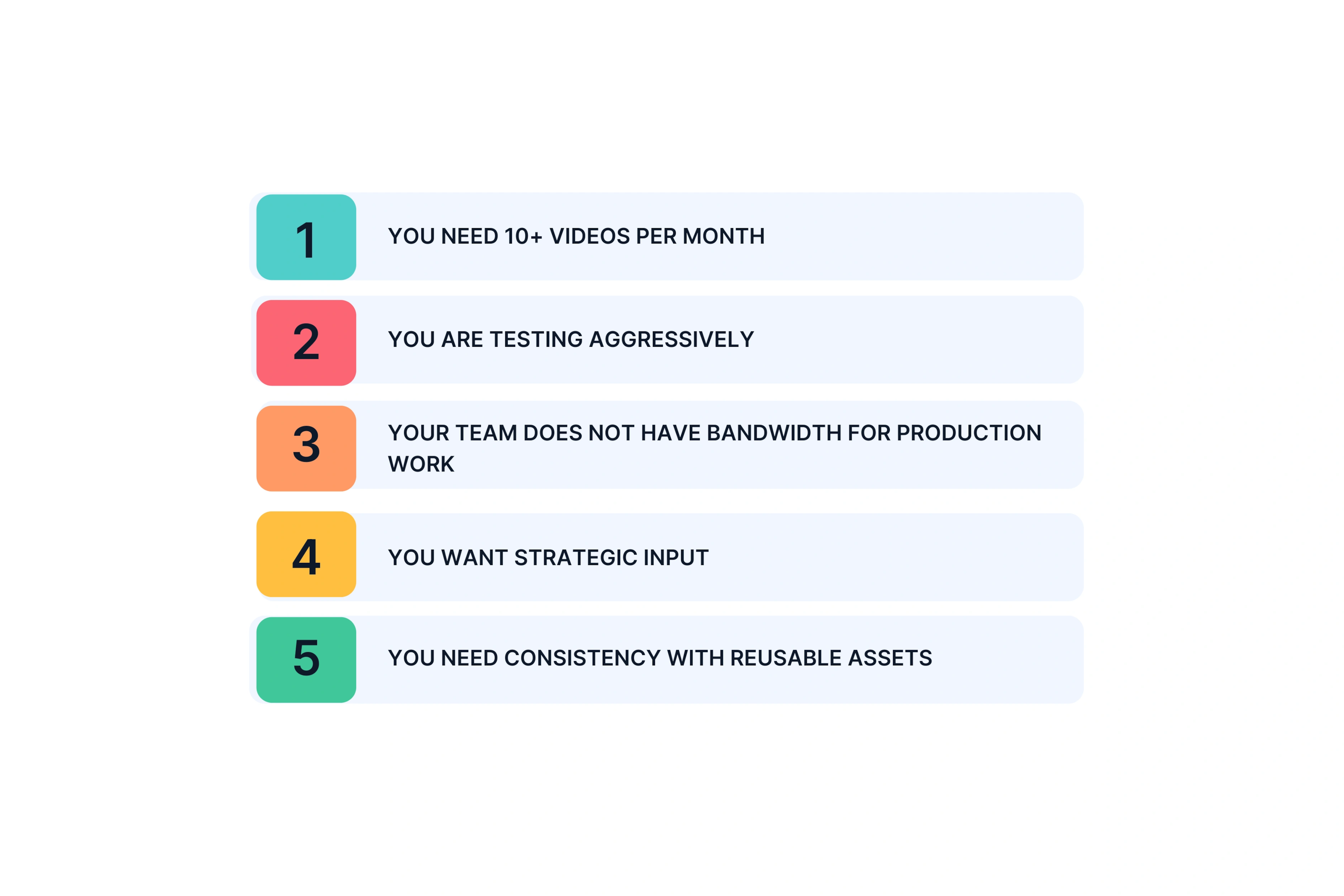
Not every brand needs a creative partner. But if any of these apply to you, partnership is the right fit.
Partnership works when:
You need 10+ videos per month and cannot manage that internally.
You are testing aggressively and need fast iteration to find winners.
Your team does not have bandwidth for production work.
You want strategic input, not just access to software.
You need consistency with reusable assets and brand alignment across campaigns.
Case Study: Creative Agency White-Label Production
A performance marketing agency needed UGC for 12 D2C clients. Managing 30+ creators monthly was unsustainable.
By partnering with Unscript, they designed custom virtual influencers for each client's ICP. The agency produced 200+ videos per quarter and reduced per-video costs by 60% while maintaining full creative control and client branding.
AI Ethics, Authenticity, and Transparency (What You Need to Know)
The disclosure question comes up often. When do you need to reveal that your UGC content is AI-generated?
FTC guidelines are clear on testimonials:
If you claim "real customers" said something, and it is AI-generated, you must disclose.
Product demos, how-to videos, and educational content fall into a gray area.
Best practice is light transparency. It builds trust and does not kill performance.
Authenticity is not about whether actors held the camera. It is about whether your message connects.
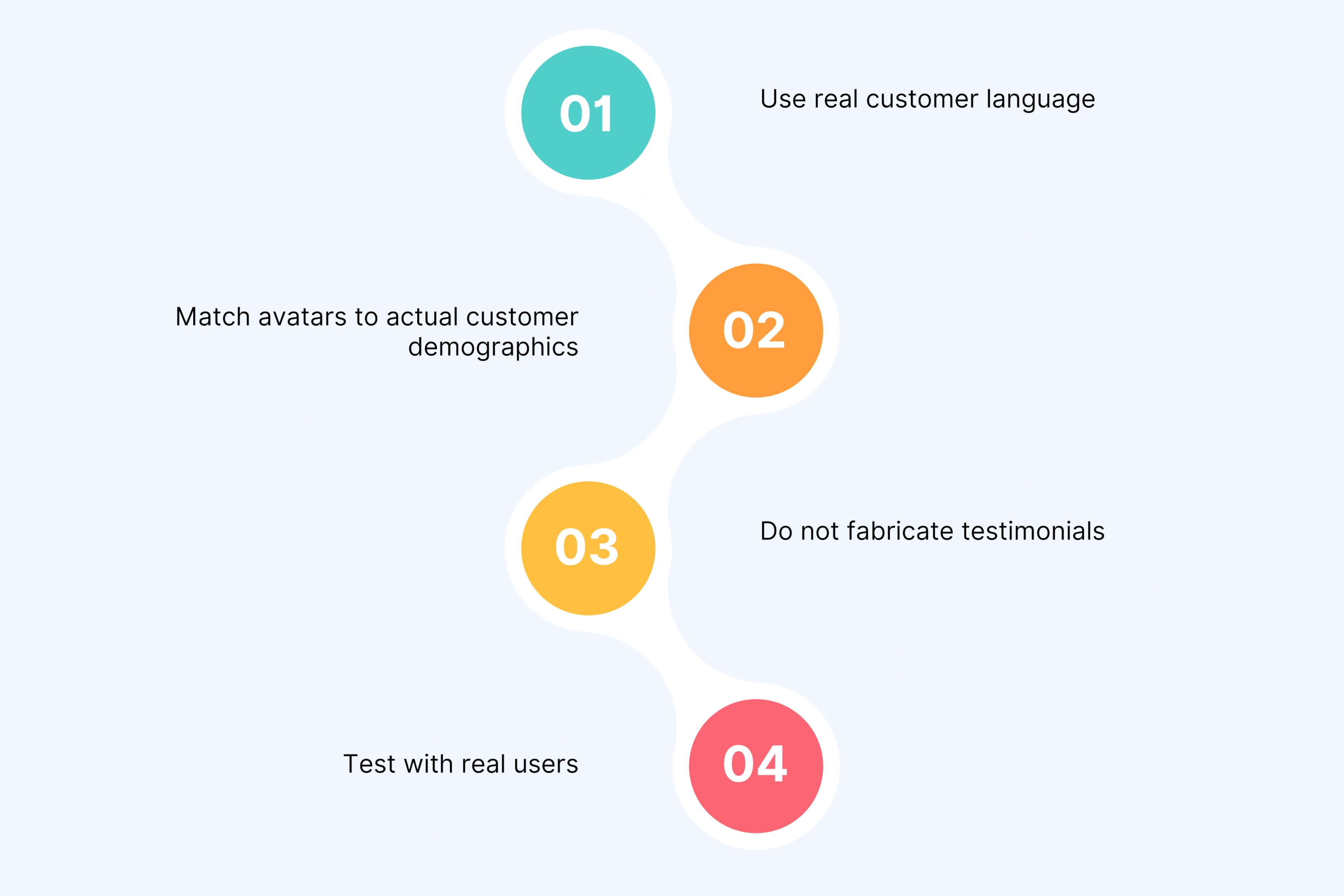
What works:
Use real customer language, not corporate scripts that sound robotic.
Match avatars to actual customer demographics so your audience sees themselves.
Do not fabricate testimonials. Use AI for product demos and education, not fake reviews.
Test with real users. If they engage, it is working.
The hybrid future:
Real customer insights combined with AI production create scalable authenticity. You listen to what customers say. You create UGC ads that reflect their voice. You test and iterate fast. That is how brands scale video without losing trust or inflating ad spend on endless creator management.
What This Means for Teams Scaling Video in 2025
The paradigm is shifting from creator dependency to creative control. Speed matters because faster testing means faster optimization and better performance.
Budget moves from per-video production to distribution and testing. Early adopters build institutional knowledge that becomes a competitive advantage. Scaling video means strategic iteration, not just volume.
Ask your team these questions. Are we testing enough variations to find winners? Is our UGC process fast enough to capitalize on trends? Are we spending more time managing creators than optimizing campaigns?
If your team is spending weeks and thousands just to test one hook, it is worth rethinking your production model. The bottleneck is not ideas. It is execution speed.
Schedule your strategy call now to explore how custom virtual influencer production can help your team test faster and scale smarter.
FAQs
Can AI-generated UGC really feel as authentic as creator-made content?
Yes, when done right. Authenticity is about relatability, not production method. Custom virtual influencers designed around your ICP feel real because they represent actual customers. Key factors: natural delivery, real scenarios, and conversational scripts.
Do I need to disclose that UGC ads are AI-generated?
It depends on content type. Testimonial claims typically require disclosure per FTC guidelines. Product demos and educational content are less clear. Best practice: light transparency builds trust without hurting performance. Consult legal guidance for your specific use case.
How many UGC variations should I test before scaling spend?
High-performing brands test 10 to 20 hooks to find 2 to 3 winners. First versions rarely become top performers. Traditional UGC makes this expensive at $3,000 to $10,000 for 20 creators. AI UGC makes aggressive testing financially viable.
What is typical turnaround time for AI UGC videos?
Standard product demos take 24 to 48 hours. Custom virtual influencer design or complex projects take a few days. Still significantly faster than traditional creator timelines of 7 to 14 days.
Can I use AI UGC on TikTok, Instagram Reels, and YouTube Shorts?
Absolutely. These platforms prioritize authentic, native content. Well-executed AI UGC blends seamlessly with organic user-generated content. Many brands run AI UGC in their top-performing ad sets.
How do I choose the right virtual influencer for my brand?
Match your ICP. Targeting Gen Z women? Use an avatar reflecting that demographic. Selling to multiple segments? Design multiple custom influencers. Diversity and demographic alignment matter more than perfection. Goal is representation, not aspiration.
What if my AI UGC ad does not perform? Can I iterate quickly?
Yes. That is the advantage. Test new hooks, voices, scenarios, or scripts without rehiring creators or waiting weeks. Fast iteration means faster learning. Brands using AI UGC run weekly creative refreshes instead of monthly or quarterly cycles.
Is AI UGC cheaper than working with real creators?
Significantly cheaper, especially at scale. Traditional UGC costs $200 to $500+ per video. AI UGC dramatically reduces per-video costs while enabling volume testing. ROI compounds as you build reusable assets like custom avatars and trained products.
Can I reuse the same virtual influencer across campaigns?
Yes. Once designed, custom virtual influencers deploy across products, campaigns, and platforms indefinitely. Major cost advantage: every new campaign does not require finding new creators. Marginal cost per video decreases significantly over time.
What is the difference between self-service tools and a creative partner?
Self-service gives you software access with no strategic guidance. You handle production yourself. A creative partner provides consultative recommendations on hook testing, avatar selection, and scenario design, plus end-to-end production. Most marketing teams do not have bandwidth to become video producers on top of their actual jobs.
Let's Turn Your Scripts into Stunning Videos. Sign Up Now.
Stop struggling with video creation. Our AI simplifies the process, letting you create professional-looking videos from text in record time. Try it for free today!
How to Scale UGC Video Ads Without Losing Authenticity (or Your Budget)
UGC video ads drive conversions, but scaling them is expensive and slow. Learn how brands test multiple hooks, maintain authenticity, and reduce ad spend without creator dependency.
Your UGC ad is working. It is pulling 4x ROAS on Meta. Then week three hits and performance drops by half.
You need fresh hooks. Your creator is booked for two weeks. Finding new vetted creators means starting over and spending another $2,000.
This is the UGC scale problem. The ads work, but traditional production does not keep up with testing needs.
This guide shows you why UGC video ads perform, where creator-dependent production breaks down, and how brands are testing 20 variations without hiring 20 creators or waiting weeks for turnarounds.
Key Takeaways
Performance drops fast: UGC video ads convert because they feel real, but creative fatigue kills performance after 2 to 3 weeks. Data shows that UGC ad performance typically drops 30–50% after just 2–3 weeks, which is why high‑performing brands treat UGC as a constantly refreshed testing engine, not a one‑and‑done campaign.
Creator dependency limits scale: Traditional UGC depends on creators, which limits how fast you can test and how much you can produce.
Custom avatars work: Advanced brands use custom virtual influencers designed to match their exact customer profile, not generic AI avatars.
Testing needs volume: Scaling UGC means testing multiple hooks at once, which traditional production cannot support at a reasonable cost.
Partnership beats tools: The future is working with creative partners who provide strategy and finished videos, not self-service tools you operate yourself.
Why UGC Video Ads Work (And Why They Stop Working)
UGC video ads outperform polished brand content. The reason is simple. People trust other people more than they trust brands.
When someone scrolls Instagram or TikTok, they see a mix of posts from friends and ads. UGC ads look like posts from real customers. They do not scream "advertisement." That makes them scroll-stoppers.
The performance numbers tell the story:
Split-screen testimonials on Meta outperform studio demos by over 200%. Meta’s own benchmarks show that UGC‑style ads can achieve up to 3–4× higher ROAS than traditional studio‑produced ads, especially in e‑commerce and D2C verticals.
UGC-style content on TikTok gets 5x higher engagement than polished ads.
Here is the problem. After 2 to 3 weeks, the same hook or creator stops feeling authentic. Your audience has seen it. They scroll past it.
You need fresh content fast. Traditional UGC production cannot deliver that speed. You are stuck waiting on creators and spending hundreds per video. That is where the scale problem starts.
The Creator Dependency Problem (And Why It Kills Scale)
Most brands produce UGC the same way. They find creators, send briefs, wait for videos, give feedback, wait again, and finally get the finished product. This process has real costs that add up fast.
What it actually costs:
Each video costs $200 to $500 per creator.
Testing 20 different hooks means spending $4,000 to $10,000.
Turnaround time is 7 to 14 days from brief to final video.
You need 10 hook variations to find one winner. But most brands cannot afford to produce 10 videos with UGC creators. That is the testing trap.
The Hidden Costs No One Talks About
Finding and vetting creators who match your brand takes time. You need someone who understands your message and represents your audience. That is not easy to find.
The costs you do not see on the invoice:
Communication lag with back and forth emails, revisions, and approval cycles.
Inconsistent quality where one creator nails it and another misses completely.
Copyright issues and usage rights negotiations for every single video.
Geographic limits when you need someone in a specific niche or demographic.
When Creative Fatigue Sets In
Your audience starts recognizing patterns. Same background. Same energy. Same style. Even if you rotate creators, the format feels repetitive.
The momentum problem:
Your winning ad stops working after 2 to 3 weeks.
You cannot produce replacements fast enough to maintain performance.
High-performing brands test constantly, but traditional UGC production was not built for that pace.
How Custom Virtual Influencers Solve the Scale Problem
Generic AI avatars feel robotic. They do not connect with your audience because they look and sound like software, not people. Custom virtual influencers are different. They are designed around your ideal customer profile.
What makes them different:
Built to match your audience demographics: ethnicity, gender, age, style, and voice.
Designed once and reused across products, campaigns, and platforms indefinitely.
Cost per video drops over time because the same avatar works for hundreds of variations.
Authenticity is not about whether a real human held the camera. It is about relatability and representation. When your avatar matches your target customer, your ads feel real.
What Makes Virtual Influencers Feel Authentic
A custom AI avatar that matches your audience performs better than a generic stock avatar. The key is in the details.
What brands look for:
ICP-based design that reflects your actual customer demographics, not random faces.
Natural delivery with casual speech, pauses, and filler words like "honestly" or "um."
Real scenarios like kitchen counters, car interiors, or bedroom backgrounds instead of studio sets.
Consistency where the same virtual influencer appears across campaigns, unlike rotating through 10 different creators.
This is not about perfection. It is about connection. Your audience wants to see someone who looks and sounds like them.
Custom avatars are only part of the solution. Product training takes it further. This means training AI on your specific products so they appear accurately in every video.
What product training enables:
Precision rendering of your products across different scenarios and angles.
Brand logo integration, proper lighting, and realistic product b roll handled automatically.
Once trained, your products appear perfectly in hundreds of AI UGC videos without reshoots.
A beauty brand needed UGC testimonials for 15 SKUs across 3 audience segments. Traditional approach meant hiring 45+ creators, spending $13,500+, and waiting 4 to 6 weeks.
Unscript designed 3 custom virtual influencers matching each audience segment. The team trained AI on the product catalog and produced 60+ video variations in under 2 weeks. The brand ran aggressive A/B testing without inflating ad spend on creator costs.
What to Test (And Why Most Brands Don't Test Enough)
Creative fatigue is real. Performance drops 30 to 50% after 2 to 3 weeks. Your winning ad stops winning because your audience has seen it too many times.
High-performing brands test 10 to 20 variations at once to find winners fast.
Traditional UGC makes this prohibitively expensive. AI UGC content changes the math.
The economics are simple. You cannot afford to test 20 hooks if each video costs $300 and takes two weeks. Speed matters. Faster testing means faster learning and better ROAS.
The difference is speed and volume. You explore more ideas. You find what works faster. You do not wait on actors or editing cycles. You create, test, and scale.
Why Partnership Beats Self-Service Tools (And What to Look For)
Self-service tools give you software access. You log in, pick an avatar, write a script, and try to create content yourself. The problem is most marketing teams do not have bandwidth to become video producers on top of everything else they manage.
The tool trap:
You get access to software but no strategic guidance on what hooks to test or how to structure scenarios.
Your team becomes the production bottleneck because someone has to write scripts, select avatars, and handle editing.
No one tells you which message works best or how to scale production across campaigns.
A creative partner approach is different. You provide briefs and campaign goals. They deliver strategy and finished videos. Turnaround is 24 to 48 hours for standard UGC and a few days for custom virtual influencer creation.
Self-Service Tools vs Creative Partner
Self-service tools:
You script, select avatars, edit, and iterate yourself.
No strategic input on what your audience responds to or how to test effectively.
Your team spends hours on production instead of strategy and performance.
Creative partner approach:
You provide briefs, product info, campaign goals, and target ICP.
You receive strategic recommendations like avatar selection, hook suggestions, and scenario design, plus complete videos ready to upload.
Iteration cycles are handled end-to-end so you focus on marketing, not production.
When Partnership Makes Sense
Not every brand needs a creative partner. But if any of these apply to you, partnership is the right fit.
Partnership works when:
You need 10+ videos per month and cannot manage that internally.
You are testing aggressively and need fast iteration to find winners.
Your team does not have bandwidth for production work.
You want strategic input, not just access to software.
You need consistency with reusable assets and brand alignment across campaigns.
Case Study: Creative Agency White-Label Production
A performance marketing agency needed UGC for 12 D2C clients. Managing 30+ creators monthly was unsustainable.
By partnering with Unscript, they designed custom virtual influencers for each client's ICP. The agency produced 200+ videos per quarter and reduced per-video costs by 60% while maintaining full creative control and client branding.
AI Ethics, Authenticity, and Transparency (What You Need to Know)
The disclosure question comes up often. When do you need to reveal that your UGC content is AI-generated?
FTC guidelines are clear on testimonials:
If you claim "real customers" said something, and it is AI-generated, you must disclose.
Product demos, how-to videos, and educational content fall into a gray area.
Best practice is light transparency. It builds trust and does not kill performance.
Authenticity is not about whether actors held the camera. It is about whether your message connects.
What works:
Use real customer language, not corporate scripts that sound robotic.
Match avatars to actual customer demographics so your audience sees themselves.
Do not fabricate testimonials. Use AI for product demos and education, not fake reviews.
Test with real users. If they engage, it is working.
The hybrid future:
Real customer insights combined with AI production create scalable authenticity. You listen to what customers say. You create UGC ads that reflect their voice. You test and iterate fast. That is how brands scale video without losing trust or inflating ad spend on endless creator management.
What This Means for Teams Scaling Video in 2025
The paradigm is shifting from creator dependency to creative control. Speed matters because faster testing means faster optimization and better performance.
Budget moves from per-video production to distribution and testing. Early adopters build institutional knowledge that becomes a competitive advantage. Scaling video means strategic iteration, not just volume.
Ask your team these questions. Are we testing enough variations to find winners? Is our UGC process fast enough to capitalize on trends? Are we spending more time managing creators than optimizing campaigns?
If your team is spending weeks and thousands just to test one hook, it is worth rethinking your production model. The bottleneck is not ideas. It is execution speed.
Schedule your strategy call now to explore how custom virtual influencer production can help your team test faster and scale smarter.
FAQs
Can AI-generated UGC really feel as authentic as creator-made content?
Yes, when done right. Authenticity is about relatability, not production method. Custom virtual influencers designed around your ICP feel real because they represent actual customers. Key factors: natural delivery, real scenarios, and conversational scripts.
Do I need to disclose that UGC ads are AI-generated?
It depends on content type. Testimonial claims typically require disclosure per FTC guidelines. Product demos and educational content are less clear. Best practice: light transparency builds trust without hurting performance. Consult legal guidance for your specific use case.
How many UGC variations should I test before scaling spend?
High-performing brands test 10 to 20 hooks to find 2 to 3 winners. First versions rarely become top performers. Traditional UGC makes this expensive at $3,000 to $10,000 for 20 creators. AI UGC makes aggressive testing financially viable.
What is typical turnaround time for AI UGC videos?
Standard product demos take 24 to 48 hours. Custom virtual influencer design or complex projects take a few days. Still significantly faster than traditional creator timelines of 7 to 14 days.
Can I use AI UGC on TikTok, Instagram Reels, and YouTube Shorts?
Absolutely. These platforms prioritize authentic, native content. Well-executed AI UGC blends seamlessly with organic user-generated content. Many brands run AI UGC in their top-performing ad sets.
How do I choose the right virtual influencer for my brand?
Match your ICP. Targeting Gen Z women? Use an avatar reflecting that demographic. Selling to multiple segments? Design multiple custom influencers. Diversity and demographic alignment matter more than perfection. Goal is representation, not aspiration.
What if my AI UGC ad does not perform? Can I iterate quickly?
Yes. That is the advantage. Test new hooks, voices, scenarios, or scripts without rehiring creators or waiting weeks. Fast iteration means faster learning. Brands using AI UGC run weekly creative refreshes instead of monthly or quarterly cycles.
Is AI UGC cheaper than working with real creators?
Significantly cheaper, especially at scale. Traditional UGC costs $200 to $500+ per video. AI UGC dramatically reduces per-video costs while enabling volume testing. ROI compounds as you build reusable assets like custom avatars and trained products.
Can I reuse the same virtual influencer across campaigns?
Yes. Once designed, custom virtual influencers deploy across products, campaigns, and platforms indefinitely. Major cost advantage: every new campaign does not require finding new creators. Marginal cost per video decreases significantly over time.
What is the difference between self-service tools and a creative partner?
Self-service gives you software access with no strategic guidance. You handle production yourself. A creative partner provides consultative recommendations on hook testing, avatar selection, and scenario design, plus end-to-end production. Most marketing teams do not have bandwidth to become video producers on top of their actual jobs.
We are committed to safety, security, and ethical use of our service. Al avatars can only be created and shared with express consent and cannot be used to spread content that's harmful to others.
December 23, 2025
How to Scale Video Ad Production Without the Traditional Bottlenecks
Learn how teams produce 20-30 video ad variations per campaign without massive budgets. Practical strategies for scaling video production that actually work.
Short-Form Video Ads: Why Most Fail in 7 Days (And How to Win)
Most short-form video ads lose 50% performance in 7 days. Learn the attention patterns, variation strategies, and platform tactics that sustain results.
How to Scale UGC Video Ads Without Losing Authenticity (or Your Budget)
UGC video ads drive conversions, but scaling them is expensive and slow. Learn how brands test multiple hooks, maintain authenticity, and reduce ad spend without creator dependency.
Avatar Marketing: Which One Do You Actually Need? (And How to Know)
Avatar marketing can mean digital AI characters OR customer profiling. Learn which one you need, when each works, and how to avoid costly mistakes in your strategy.
We are committed to safety, security, and ethical use of our service. Al avatars can only be created and shared with express consent and cannot be used to spread content that's harmful to others.
Data Encryption
Your data is encrypted both in transit and at rest, ensuring safe and confidential communications at all times.
Privacy Compliance
Our platform adheres to GDPR, CCPA, and SOC 2, safeguarding your data with strict security protocols.
Identity Verification
We use identity checks to ensure only authorized individuals access your account and data.
24/7 Monitoring
Our system continuously monitors for vulnerabilities, keeping your data safe from potential risks.

.webp)




.svg)
.svg)
%201.svg)

.webp)
.webp)


.svg)
